Showing posts with label Ukrainian immigrants in Manitoba. Show all posts

Finding My Great-Aunt Michalina's Immigration Records

A few weeks ago I received an email from Jim Onyschuk, the President of the Toronto Ukrainian Genealogy Group, announcing the January meeting along with a notice of new Canada Passenger Records from 1881 – 1922 now available online at Family Search (http://familysearch.org/search/collection/1823240 ). 

Always on the look out for my great-aunt Michalina’s records, I hit the link and searched her name as usual, to no avail. I then searched just her last name (proper spelling) and found about 10 hits with different spellings, including one that I knew immediately was her: Michatine Heukan. Her name had been transcribed incorrectly with a scratch on the page changing the ‘l’ to a ‘t’ and the last letter appearing blurry as an ‘e’ not an ‘a’. The last name was mangled due to a peculiar formation of the letter before the ‘k’ which I think was intended to be ‘c’ and the addition of an ‘e’ before the ‘u’.

MichalenaHuckan_edited
Michalina Huckan c.1910

Michalina was 17 when she arrived in Saint John, New Brunswick on April 4, 1910 on the SS Lake Michigan. She was listed as single, having $24 and heading to Winnipeg, Manitoba to her brother on her CPR ticket. Her previous occupation as well as her intended occupation was ‘servant’. 

Huckanfamily_edited
John Huckan c.1910

Now that I had that information, I searched for her again on www.ancestry.com to find any additional details. I had some difficulty finding her as her name was shown on Ancestry as Michatina Henskan. The only new information was a photo of the ship and the fact that it had departed from Antwerp, Belgium. Finding her on Ancestry allowed me to link this record to her on my family tree. I was also able to correct her name so that future researchers can find her more easily.

When I compared Michalina’s arrival dates with other family members, I made an another interesting discovery. I had previously searched all the boat records for the ship my grandmother ( her sister) arrived on (SS Samland June 4, 1911) , her brother John (SS Montreal April 6, 1908), his wife Frances (SS Corinthian October 30, 1910) and brother Nikolai who made several trips back and forth but it never occurred to me to check my grandfather’s ship: SS Lake Michigan April 4, 1910. She was sent over with her brother-in-law, John Zarecki, my grandfather.

This makes some sense. Michalina’s father was sending John and (later) his wife to Canada. John was literate and spoke several languages. On the other hand, he was being send to Canada because he was mentally unstable (diagnosed manic/depressive later). This makes me think that Michalina’s fiancé was with her on the ship, as well as other people from her village. I may be able to determine her fiancé's name after all. A needle in the haystack but perhaps. 

HuckanFamilyc.1914_edited
Michalina’s fiancé – name unknown
from Repuzhintsy c.1910
                                                       
Another find on the Family Search list of Huckans was her brother Nikolai  Hucan showing when he arrived in Quebec City May 1910 on the Prinz Adalbert and on Ancestry (Nicola Hucan) I found he returned to the U.K. on November 5, 1921 on the SS Minedosa. I had previously found an arrival record for 1913 proving he made several trips to Canada to work before returning to his wife and family in Repuzhintsy.

Nikolai Huckan c.1910

Back To My Memoir

By now most of you will be wondering when I’m going to stop writing about my great-aunt Lena. Between Christian Cassidy's research and my own, we have exhausted the topic. Apart from some LDS research I need to do before erecting a monument on her grave at Brookside Cemetery, I’m finished. We now know far more about her life and death than we ever did before. This exercise illustrates the amount of detail that can be gleaned from genealogical, archival and geographical research to bring to life the characters of your memoir. The family photos, news coverage from the fire and a lot of 'perhapsing' resulted in a real person coming to life on the page. I will leave this topic for now and move back to my memoir which has been lying fallow these many months.

After writing the first draft of what I thought was the first two thirds of my story, I got stuck on where and how to end it. I played around with various possibilities but nothing felt right to me. Advice from my writing pals and teacher didn't help either. The unexpected death of our daughter Milo in May 2010 and other family demands crowded in on my writing time. I distracted myself with genealogical research on my husband's family and setting up another blog. I even considered chucking my memoir!


A few weeks ago when playing on Facebook or Twitter, I can't remember quite how, I came upon the website of James FitzGerald, a Toronto author and journalist. I then connected to the Random House site  where the first chapter of his latest book, WHAT DISTURBS OUR BLOOD is available. The power of his voice knocked me out. I could see how he deftly braided together the threads of a complex (far more so than mine) family and personal memoir as well as a medical history of his prominent grandfather and father told from the voice of the boy, himself. Suddenly, I could see a way forward for my story.

Now I'm writing again and it will be in my voice, my style, my weaving of the threads of my own story. You never know where the inspiration will come from. Just keep reading. The writing will follow.


Copyright © 2011, Ruth Zaryski Jackson

West End Dumplings: Elmwood’s Riverview Hotel (Part 3): A 'near holoc...

Here is Christian's post on the fire at the Riverview Hotel February 5, 1918:

West End Dumplings: Elmwood’s Riverview Hotel (Part 3): A 'near holoc...: "Talbot Ave fire brigade ca. 1921 (source) Though the Elmwood fire hall was within view of the Riverview's front door, at around 3:30 a.m...."

Copyright © 2011, Ruth Zaryski Jackson

My Obsession With My Great-Aunt Lena


Lena Huckan Winnipeg c. 1914

My obsession with my great-aunt Lena has been contagious. Christian Cassidy, a local historian and Winnipeg blogger, has picked up the family story of my great-aunt Lena's death in a hotel fire in Winnipeg on February 5, 1918. He has written a four part piece on the anniversary of the fire and posted his research, with newly discovered photographs from the Manitoba Archives, on one of his captivating blogs called West End Dumplings. I am very grateful to him for uncovering this additional information and publishing her sad story to a wider audience. Thank you Christian!


Copyright © 2011, Ruth Zaryski Jackson

Tracing Lena Huckan – Part One (Ben Nevis House) Guest Post by Christian Cassidy (This Was Winnipeg)

After writing my "Letters to a Dead Great-Aunt" series, I made the acquaintance of Christian Cassidy, a local Winnipeg historian who writes several blogs. He offered to do some additional research for me in Winnipeg to uncover more about the life and death of my Great-Aunt Michalena in a hotel fire in 1918. Here in his guest post is Part One, based on information found in the 1915 Henderson Directory for Winnipeg. Lena was listed as living in Ben Nevis House at 42 Dagmar Street.


Tracing Lena Huckan

Ben Nevis House

In 1903 advertisements begin to appear for "rooms for rent" at 42 Dagmar. At first it was three, then four rooms.


The Morning Telegram -- July 19, 1907

The name "Ben Nevis House" (named for the highest mountain in Great Britain) does not appear in ads until June 1907.


An advertisement in 1917 says that Ben Nevis House is the "first house from Notre Dame". If that is the case then this is a picture of Lena‟s neighbourhood circa 1903. It's a photo looking up Notre Dame FROM Dagmar so that would be her streetcar, taking her to and from the city core.

Could Lena have worked at Ben Nevis as well as live there, similar to what she did (later) at the Riverview (Hotel)? Ben Nevis House routinely had ads similar to this in the papers. From March 14, 1913:

Classified (Manitoba Free Press)
SMART GIRL WANTED AT ONCE FOR
upstairs and wait table. $20. Ben Nevis House. 42 Dagmar Street.

Ben Nevis House was a regular advertiser and not just with little classified ads but larger ones in amongst city hotels; so it may have been a little high end, perhaps out of Lena's price range.
Other mentions of Ben Nevis around the time she may have been living there:


The Voice -- August 3, 1917

Perhaps had some fun while she lived there….

Caledonian Sports Witnessed by Large Crowd at Horse Show Building Last Night. October 5, 1910 MB Free Press
Close on 3,000 people witnessed the first annual Caledonian games at the Horse Show amphitheatre last night. Mixed in with the Scotch music and dancing were the more common athletic sport.
Tug- of war - Caledonians swept everything before them in this contest. They first defeated the Electrical Union team in two straight -pulls and then did the same thing, only more easily, to a team
from the Ben Nevis house.


The Neighbourhood

All of the houses on that first block of Dagmar, and parallel streets, are now gone. That stretch of Notre Dame is fairly commercial with some light industrial and as the Notre Dame buildings expanded, the houses directly behind them disappeared.


Period House near Bannatyne Ave. and Notre Dame http://www.flickr.com/photos/christiansphotos/5138797512/

There are still pockets of period houses in the neighborhood.


These are photos of houses within a couple of blocks of Ben Nevis House and, presumably, would be similar in size or style. Dagmar wasn't noted for being a remarkable street in comparison to the rest of the neighbourhood.

Central Park


Given where she lived, she definitely would have visited Central Park, just a couple of blocks to the south. ( http://winnipegdowntownplaces.blogspot.com/2010/09/downtown-places-central-park.html )

Central Park was one of Winnipeg's first parks. It was originally a natural space, but
by the time she lived there, the park would have boasted tennis courts, a bandshell and the Waddell Fountain. It was a very popular place and you can see the treeline from where she lived.


Some of the old houses and buildings exist around the park. Knox Church (above) was built between 1914 and 1918 (the war interrupted). The Warwick, Winnipeg's first upscale apartment block, was there in 1909. (for more on the Warwick:  http://winnipegdowntownplaces.blogspot.com)


One feature that was unveiled in 1914 was the Waddell Fountain. It was an attraction unto itself. This summer, in fact, the fountain was re-installed after a complete rebuild and upgrade.

More on the fountain and the interesting story behind it http://www.gov.mb.ca/chc/hrb/prov/p078.html)

Other period shots of Central Park: 
http://peel.library.ualberta.ca/postcards/PC002133.html


Copyright © 2010, Christian Cassidy for Ruth Zaryski Jackson


Working in Cranberry Portage, Manitoba 1930

My Mother celebrated her 97th birthday a few weeks ago. Still alert and mobile, she says she might now make it to 100! A remarkable feat for someone who never knew as a child if they would have enough to eat. She went to work at fifteen to help the family. In 1930, when she was sixteen, she ended up working in Cranberry Portage, a booming frontier town in northern Manitoba.

In 1928, a devastating forest fire had swept a large part of the old town built of logs and wood. I asked my mother to tell me how she came to work in Cranberry Portage, Manitoba in 1930, just two years after the big fire.

She told me: "jobs just seemed to land in my lap, one after another".

One day she was walking down the street with a friend in Winnipegosis and saw a "Help Wanted" notice in a store window. A woman was looking for a person to come to Cranberry Portage with her family to help cook and look after their three children. Her husband worked at a gravel pit while the woman had a job cooking for a camp of men who worked along the railway track outside of Cranberry Portage. Mom couldn’t remember if it was a mining camp or a lumber camp. Most likely it was a camp for C.N.R. workers who were laying eighty-seven miles of railroad track to a wilderness tent town of Flin Flon. Mrs. Anderson, Mom recalled, was a woman of Polish and Icelandic descent. While Mom worked for her for about a month, they lived in a tent which was actually a temporary frame building with a canvas roof tied on top.

Mrs. Harry Anderson
Cranberry Portage, MB
1930

When Mrs. Anderson no longer needed Mom, she was offered a job at the Redwing Café Store Bakery as a waitress and helper, replacing a Swedish nineteen year old boy who had gone home for a month. After a month, Mom was asked to stay on, and the other hired girl left to help relatives who had just come to town to open a restaurant.


My mother, Jean Zaretsky far right, Petersen/Schamerhorn family,
owners of Redwing Cafe Store Bakery, Cranberry Portage, MB
1930

"Hutch" and his family owned the café. His wife was  Norwegian or Swedish from Seattle, Washington and his mother also lived with them. Mom recalls she worked there for three or four months. She knows for sure she was there for her seventeenth birthday on October 23rd. Likely she went for the summer season in June or July and left in November.


Jean Zaretsky age 17
Cranberry Portage, MB
1930

When I think about what I was doing at age sixteen or seventeen, or what my children and grandchildren are doing, I think my mother was courageous to take a job so far from her home in Sclater, Manitoba and go to a northern town full of mostly men of a hundred different nationalities. She set the adventure bar high for all of us and we are so grateful. Happy Birthday, Mom.

Copyright © 2010, Ruth Zaryski Jackson

Letter to My Dead Great-Aunt Part Three

My mother told me Uncle John didn’t like to spend money but as your next of kin, he would have been the one responsible for your burial. I wondered if he had done nothing to commemorate your life. Maybe your body was never recovered. Maybe he was too overcome with grief. I wished I had asked Auntie Huckan, his wife but I hadn’t known about you then. I wished my mother had asked her but she didn’t think to ask. I found the details of your burial by chance and more details on your Death Certificate.

Armed with the name of the hotel where you died and the exact date of the fire, I pressed on and tried to find a photograph of the building. The Riverview Hotel had been built in 1906 or earlier (Henderson Directory 1906) and a large 1-storey addition of wood construction had been added in 1914. The Winnipeg architect, Charles S. Bridgeman designed it for the owner, J.J. O'Connell in 1913. No photograph was found but an interesting discovery showed up in the city records.

Negligence

I discovered on the Building Permit for the addition, the owner J.J. O'Connell had on June 11, 1914 been “convicted and reprimanded for not complying with Notice issued January 7, 1914 re Exit doors”. A Building Inspector had deemed the building dangerous four years before the fire! Maybe even before you were hired.

The Historical Buildings Officer for Winnipeg sent me several newspaper clippings about the fire on the night of February 5, 1918 when the Riverview Hotel burned to the ground. Three perished in the fire: a nurse employed by the owner, a veteran of WWI and you, my dear Great-Aunt Michalena, described as “Lena Wuchan, kitchen girl” and “Lena Guchan, kitchen maid”. They couldn’t even spell your name right.

Riverview Hotel
322 Nairn Avenue
Elmwood, Manitoba
Here’s what happened as I can piece it together from the clippings. Early in the morning on the 5th of February about 3:30 a.m. a fire broke out, possibly in the kitchen of the Riverview Hotel. Fanned by 30 mile an hour gale force winds, the fire quickly spread to nearby buildings. Five fire brigades responded promptly though there were 6-8 other fires in Winnipeg at that night. The Riverview Hotel was leveled within an hour. Total damage was estimated to be $180,000.


A neighbor called the fire department. Everyone was asleep when the alarm bells in each room went off. You were last seen in your room on the second floor. Smoke poured into the rooms and the stairs were blocked by dense smoke. The hotel owner, his wife and six children were sleeping on the first floor and all escaped unharmed except for smoke inhalation. Mr. O’Connell later told the press of the frantic attempts to escape by those who died. I can only try to imagine the terror you felt when you realized there was no way out.


Your body was found in the ashes two days later near the centre of the basement buried several feet beneath the debris. They believed these were your remains because they were found in the location of your room in the building. But you were found in the basement, because all three stories collapsed. Identification of the three victims was based on location of the bodies when found. A fourth victim died later in hospital.


The inquest a week later found no fault lay on the shoulders of the hotel owner or the fire department for the deaths, despite the fact that the building hadn’t been inspected for a year.

Newspaper Clippings from
Winnipeg Firefighters Museum
1918


And so dear Auntie, this is your story, the evidence that you lived and died in Winnipeg in a tragic hotel fire that cold February night in 1918. There are still some gaps and incomplete knowledge of your short life. I promise you I will continue to search for more details, such as your immigration records and whatever vital records exist in Winnipeg or your ancestral village of Repuzhintsy. My cousins and I will be replacing the numbered stone on your grave with a personal memorial stone. I will honour your life by telling your story to all who will listen. I will never forget you and other immigrants who lost their lives in accidents and unsafe working conditions, trying to build a better life and a brighter future in Canada.

May your soul rest in peace. Vichnaya Pamiat.

love from your Grandniece,
Ruth


Copyright © 2010, Ruth Zaryski Jackson

Getting Published

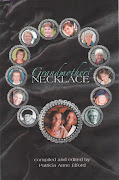
Yesterday I received a package containing a copy of Grandmothers’ Necklace where two of my poems appear: one about each of my grandmothers.

I tear the padded bag open and am unprepared for the thrill. OMG, as the kids say in text-speak; my chest fills with pride as I search for my entries. There’s one of them on the first page! Knowing You © Ruth Zaryski Jackson 2009. I exhale, read quickly through it and glance at the photo of my paternal grandmother, my Baba. Very nice, though the quality of the photo I sent was poor. Still, the first entry. Good start.

Next, I look for my other one. There it is on page 38 but whoops, my name is misspelled: Zarysky instead of Zaryski. Flash of anger. That was careless of somebody. The editor, the publisher; who to blame? Gradually I relax. I talk to myself. It’s ok, Ruth. It’s correct in the first entry. Maybe they can correct it in future print runs. Just chill.

I forget about the error and focus on the poem. Wash Day © Ruth Zaryski Jackson 2009. Looks fine, though not as prominent on the left side of the book. The old photos of my grandmother and my mother at age 6 are not bad. I read the poem and smile. Not too bad at all.

I’d arranged to meet a couple of old university friends in Toronto last night at the former Park Plaza Hotel Roof Top Lounge, so I tuck a copy of the book in my bag. When I show it to them, they’re impressed. I smile with pride. I’m a writer now and here’s proof.

By the time I roll into bed, after reading a few more pieces in the book, I yawn and expect to be out in a flash. No. The excitement is still bubbling. I enjoy the reruns of the day for several more hours.

My Mother's 96th Birthday

Jennie age 6 years

Today is my mother’s 96th birthday. This post a tribute to her and her life.
_______________________________________________________________

My mother, Jennie, was born October 23, 1913, the fourth child but second girl of 8 children to John and Maria Zarecki. Her Ukrainian parents and two older siblings had emigrated from Repuzhintsy, Bukovina (then part of Romania, Austria) in 1910-11.

Jennie loved school and was very quick but left after grade 6, despite her teacher’s pleading with her father to allow her to attend high school. He was flattered to have a smart daughter but couldn’t afford to send her to high school in Ethelbert, just 20 miles away.

My maternal grandmother could neither read nor write and relied on old proverbs, folk tales and sayings, along with the teachings of the Orthodox Church, to explain her universe. My grandfather was literate and taught Mom the Cyrillic alphabet, read to her and encouraged her to read. Both parents went to church when the itinerant Orthodox Priest was there, but her mother attended even if it was the Catholic Priest or just the local people themselves.

The family of ten lived in a two-room plastered log house built by my grandfather on a homestead situated by what came to be Highway 10, connecting Winnipeg to the south and Swan River to the north. Jennie often sat on the step outside their crowded house and watched cars going by. She wondered where they were going, what they were doing and how their lives were different from hers. She longed to find out what lay beyond the confines of Sclater, Manitoba.

Her older sister Helen married at 15 and had six children in rapid succession. Mom was determined to escape such a fate. She wanted to find something beyond the limited horizons of many of her school friends. Although she was attractive and several local men wanted to marry her, she wasn’t at all interested. She wanted to see other places, experience more than this tiny village offered.

In the one-room school house Jennie attended there were 8 grades and teachers, often only a few years older than some of the students, taught on a permit. Being smart in school had worked against her. Frequently kept at home to help her mother against all tears and protests, she was consistently promoted, and skipped ahead when there was no other student in a grade. She started school, as was the custom, at age eight. By the time she was 12 she found herself in grade 6. She had missed a lot of background in subjects like history and science. That summer she decided, under pressure from her mother, to quit school and work to support the family. She helped her mother carrying water up the hill from the spring for wash day, baking 15 loaves at a time in the outdoor clay oven and looking after her four younger siblings. Sometimes she would work out for another family in the summer for short periods until she finally left home for good at 15. She sent money home and later helped her younger sister to go on and become a teacher. In spite of long hours, low pay, and sometimes tricky situations with her employers, she persevered toward her goal of bettering herself.

Like many young immigrant girls, my mother found work with what she knew: housekeeping. There was a shortage of domestics for upper middle class English speaking people who were accustomed to servants, and had the means to support them. After a few such positions around Manitoba and one in Cranberry Portage with an Icelandic family who ran a café, she found herself working for the Mason family in Regina. She liked them and they were good to her. The Masons had no children for her to manage, only a handicapped adult. After a year the Masons drove back to Ontario and took my mother with them. First stop was their summer home in Muskoka on Driftwood Island, then on to a large house in a neighbourhood of Toronto known as Rosedale. Here she cooked, cleaned and absorbed the values of a class beyond her roots. She learned to polish silver and set a large formal table. She learned that individual bedrooms were the norm. She learned that men treated their women with reserved respect. There was no going home now.

In 1936, while working in The Pas, Manitoba, she had met the man who was to become my father five years later. At first she was only amused that he had the same last name as her and her friends teased her that they must be cousins. He followed her to Toronto and pursued her until she changed her mind. She was nearly 26 when she married my Dad and decided to run a rooming house in downtown Toronto. I was born 2 years later.

Jennie gave way to Jean as she matured. Jean was a tall slim young woman with high cheekbones like her Dad. Her fine white-blond hair as a child was a soft light brown now. She had clear blue eyes and a pleasing smile. She was more confident after learning how the upper classes lived and got along with all types of people. In photographs of her from my childhood in the 1940s, my mother appears as a stylishly dressed attractive young woman.

“The cheap clothes just didn’t fit me properly and your Dad thought I should always buy what looked the best”.

She never skimped on quality.

My mother had no experience with a rooming house but at the suggestion of her friends saw it as an opportunity to improve their lot. She quickly answered an ad in the newspaper to rent a house. Rooming houses had to have rules. And rules had to be enforced. There were curfews. Women could not have male visitors overnight. There was one bathroom for the entire house, though the bathtub was in a separate room. No alcohol was permitted. She learned quickly how to judge people and take action. Roomers who broke the rules were out by the next week.

Four months after I was born, my father announced that he’d got a job working on the Alaska Highway building project. He left my mother with a new baby and a three-storey rooming house to look after. At that time my parents lived in two rooms and rented the other 7 rooms to single men and women for between $5 and $7 dollars a week. She did all the cleaning herself and only sent out the sheets to Home Laundry on Harbord Street. My father said he knew she could manage. She knew she could too, but maybe she didn’t want to. A year later he returned for a month’s holiday. When I was 15 months old, he took the train from Union Station to return to his job in Alaska for another 5 months. The family story is that I screamed and held onto him. I didn’t want him to go. Neither did my mother but I don't think she ever said so.

She continued to work hard after my Dad permanently returned to Toronto from Alaska. Instead of putting his money toward a new house, he announced he was going into partnership on a garage business. My mother thought this was a mistake not only because she wanted a new house, but also because Dad didn’t really trust the guy he was going into business with.

"How can you be partners with someone you don’t trust?"

He thought you could and lost about $30,000, not a small amount at the time. She continued working on depositing five, seven or ten dollars at a time into her Dominion Bank account at Yonge and Hayden Streets all through one pregnancy, a miscarriage, then another pregnancy and several surgeries. She was determined to achieve her goal of raising her family in a nice house.

Living on Charles Street was always a temporary arrangement for my mother, a way of moving towards her dream. She never wanted to raise her family there, only earn enough money to be able to buy a nice house in the suburbs. Nice meant new and clean. My father, who had been born in Europe, didn’t really understand. A house was a house. And what was wrong with living in a neighbourhood with others from the old country or other recent immigrants like himself? Mom quietly persisted until she brought him around to her way of thinking.

My mother’s best qualities are that she is always interested in people and positive. She never sees the glass as half empty, has a sympathetic ear for others and always looks on the bright side of life. She had seen the bad and the ugly in her childhood and chose not to dwell on it. She married a man who was essentially good and would never strike her. He took a drink sometimes with friends but never had ‘a drinking problem’. They both wanted a nice family and got it.

Her worst faults? This list changed as I matured and began to view her through different lenses. As a child I thought she didn’t understand me. That was probably true. I was bright, energetic and precocious and she was worn out with two, then three younger siblings and a miscarriage in between the boys. As I grew up, I realized she probably did understand me, but didn’t know how to communicate that to me in a way that I would be open to. As a young woman struggling to be independent, I thought she was self-sacrificing, too anxious to please men, too deferring to Dad. Later I realized it was her coping strategy to keep things running smoothly, especially as Dad aged and developed Alzheimer’s disease.

After my Dad died, Mom and I became friends in a way that we couldn’t as long as she had her role to play. What makes her happiest is being alive to see her family grow up, to have an open relationship with her grandchildren, to meet her 2 great-grandsons in 2005 and this, her 96th, year to greet her first great-granddaughter. She enjoys most being a part of their lives and offering, if asked, the wisdom of a life well-lived. It makes her sad when there’s conflict in the family: between her sister and her children, between her niece and nephew. She rarely expresses anger though I noticed impatience with a doctor who failed to recognize her intelligence and alertness in explaining her health problems a few years ago. She loves most visiting with her family and then thinking about it all later. What she hates most is snobbery, condescension, aggressiveness and the loud expression of anger. Jean, in her childhood, learned to value the quiet depressed demeanor in her father as opposed to his manic violent opposite. She is most proud of her family and their accomplishments and most ashamed of her own father and his abuse of his wife and children. Her secret ambition was to have finished high school and to have worked in a bank. She chose instead to work as a housekeeper and send money home to her sister Anne to help her to finish high school and become a teacher. I don’t think she has any deep dark secrets or, if there are, she has buried them so far back in the recesses of her mind that she’s forgotten and they can’t haunt her.

Jean with her great-grandson Julian April 2009