I found this piece made some very helpful points. Please have a look.
Writing a memoir: Intersecting memory and story
Showing posts with label memory. Show all posts
Showing posts with label memory. Show all posts


Your Memories, Your Book: To Tell the Truth
A useful article on truth telling in memoir from Personal Historian Wayne Groner:
Your Memories, Your Book: To Tell the Truth: The Plain Truth This article is a variation of my guest post on Sharon Lippincott’s blog, The Heart and Craft of Life Writing . A commo...
Copyright © 2011, Ruth Zaryski Jackson
Your Memories, Your Book: To Tell the Truth: The Plain Truth This article is a variation of my guest post on Sharon Lippincott’s blog, The Heart and Craft of Life Writing . A commo...
Copyright © 2011, Ruth Zaryski Jackson
The Power of a Family Secret
My personal essay The Power of A Family Secret has now been posted on Allyson Latta's new website. This essay appeared in an earlier version in several blog posts on this site. Please click on the title of my essay or Allyson's name, have a look and let me know what you think.
Copyright © 2010, Ruth Zaryski Jackson
Copyright © 2010, Ruth Zaryski Jackson
Letter to My Dead Great-Aunt Part Three
My mother told me Uncle John didn’t like to spend money but as your next of kin, he would have been the one responsible for your burial. I wondered if he had done nothing to commemorate your life. Maybe your body was never recovered. Maybe he was too overcome with grief. I wished I had asked Auntie Huckan, his wife but I hadn’t known about you then. I wished my mother had asked her but she didn’t think to ask. I found the details of your burial by chance and more details on your Death Certificate.
Armed with the name of the hotel where you died and the exact date of the fire, I pressed on and tried to find a photograph of the building. The Riverview Hotel had been built in 1906 or earlier (Henderson Directory 1906) and a large 1-storey addition of wood construction had been added in 1914. The Winnipeg architect, Charles S. Bridgeman designed it for the owner, J.J. O'Connell in 1913. No photograph was found but an interesting discovery showed up in the city records.
Negligence
I discovered on the Building Permit for the addition, the owner J.J. O'Connell had on June 11, 1914 been “convicted and reprimanded for not complying with Notice issued January 7, 1914 re Exit doors”. A Building Inspector had deemed the building dangerous four years before the fire! Maybe even before you were hired.
The Historical Buildings Officer for Winnipeg sent me several newspaper clippings about the fire on the night of February 5, 1918 when the Riverview Hotel burned to the ground. Three perished in the fire: a nurse employed by the owner, a veteran of WWI and you, my dear Great-Aunt Michalena, described as “Lena Wuchan, kitchen girl” and “Lena Guchan, kitchen maid”. They couldn’t even spell your name right.
Here’s what happened as I can piece it together from the clippings. Early in the morning on the 5th of February about 3:30 a.m. a fire broke out, possibly in the kitchen of the Riverview Hotel. Fanned by 30 mile an hour gale force winds, the fire quickly spread to nearby buildings. Five fire brigades responded promptly though there were 6-8 other fires in Winnipeg at that night. The Riverview Hotel was leveled within an hour. Total damage was estimated to be $180,000.
A neighbor called the fire department. Everyone was asleep when the alarm bells in each room went off. You were last seen in your room on the second floor. Smoke poured into the rooms and the stairs were blocked by dense smoke. The hotel owner, his wife and six children were sleeping on the first floor and all escaped unharmed except for smoke inhalation. Mr. O’Connell later told the press of the frantic attempts to escape by those who died. I can only try to imagine the terror you felt when you realized there was no way out.
Your body was found in the ashes two days later near the centre of the basement buried several feet beneath the debris. They believed these were your remains because they were found in the location of your room in the building. But you were found in the basement, because all three stories collapsed. Identification of the three victims was based on location of the bodies when found. A fourth victim died later in hospital.
The inquest a week later found no fault lay on the shoulders of the hotel owner or the fire department for the deaths, despite the fact that the building hadn’t been inspected for a year.

And so dear Auntie, this is your story, the evidence that you lived and died in Winnipeg in a tragic hotel fire that cold February night in 1918. There are still some gaps and incomplete knowledge of your short life. I promise you I will continue to search for more details, such as your immigration records and whatever vital records exist in Winnipeg or your ancestral village of Repuzhintsy. My cousins and I will be replacing the numbered stone on your grave with a personal memorial stone. I will honour your life by telling your story to all who will listen. I will never forget you and other immigrants who lost their lives in accidents and unsafe working conditions, trying to build a better life and a brighter future in Canada.
May your soul rest in peace. Vichnaya Pamiat.
love from your Grandniece,
Ruth
Copyright © 2010, Ruth Zaryski Jackson
Armed with the name of the hotel where you died and the exact date of the fire, I pressed on and tried to find a photograph of the building. The Riverview Hotel had been built in 1906 or earlier (Henderson Directory 1906) and a large 1-storey addition of wood construction had been added in 1914. The Winnipeg architect, Charles S. Bridgeman designed it for the owner, J.J. O'Connell in 1913. No photograph was found but an interesting discovery showed up in the city records.
Negligence
I discovered on the Building Permit for the addition, the owner J.J. O'Connell had on June 11, 1914 been “convicted and reprimanded for not complying with Notice issued January 7, 1914 re Exit doors”. A Building Inspector had deemed the building dangerous four years before the fire! Maybe even before you were hired.
The Historical Buildings Officer for Winnipeg sent me several newspaper clippings about the fire on the night of February 5, 1918 when the Riverview Hotel burned to the ground. Three perished in the fire: a nurse employed by the owner, a veteran of WWI and you, my dear Great-Aunt Michalena, described as “Lena Wuchan, kitchen girl” and “Lena Guchan, kitchen maid”. They couldn’t even spell your name right.
 |
| Riverview Hotel 322 Nairn Avenue Elmwood, Manitoba |
A neighbor called the fire department. Everyone was asleep when the alarm bells in each room went off. You were last seen in your room on the second floor. Smoke poured into the rooms and the stairs were blocked by dense smoke. The hotel owner, his wife and six children were sleeping on the first floor and all escaped unharmed except for smoke inhalation. Mr. O’Connell later told the press of the frantic attempts to escape by those who died. I can only try to imagine the terror you felt when you realized there was no way out.
Your body was found in the ashes two days later near the centre of the basement buried several feet beneath the debris. They believed these were your remains because they were found in the location of your room in the building. But you were found in the basement, because all three stories collapsed. Identification of the three victims was based on location of the bodies when found. A fourth victim died later in hospital.
The inquest a week later found no fault lay on the shoulders of the hotel owner or the fire department for the deaths, despite the fact that the building hadn’t been inspected for a year.
 |
| Newspaper Clippings from Winnipeg Firefighters Museum 1918 |

And so dear Auntie, this is your story, the evidence that you lived and died in Winnipeg in a tragic hotel fire that cold February night in 1918. There are still some gaps and incomplete knowledge of your short life. I promise you I will continue to search for more details, such as your immigration records and whatever vital records exist in Winnipeg or your ancestral village of Repuzhintsy. My cousins and I will be replacing the numbered stone on your grave with a personal memorial stone. I will honour your life by telling your story to all who will listen. I will never forget you and other immigrants who lost their lives in accidents and unsafe working conditions, trying to build a better life and a brighter future in Canada.
May your soul rest in peace. Vichnaya Pamiat.
love from your Grandniece,
Ruth
Copyright © 2010, Ruth Zaryski Jackson
Letter to My Dead Great-Aunt Part Two
The family story I heard from Mother and her sister Anne is that you were working at a hotel in Winnipeg saving your money to be married to your unnamed fiancé in the photograph. When fire broke out, you escaped somehow but ran back in to retrieve your $800 hidden under your mattress. You never came out. Were you overcome by smoke in that firetrap? Did the fire spread much faster than you anticipated? Or were you just a naïve girl who didn’t understand the danger and could only think of your hard-earned savings and your future going up in smoke? Eight hundred dollars in today’s dollars would be a lot of money. Brave or foolish, you lost your life in that fire.
I searched for a long time for your death and burial records. I searched newspapers for reports of a hotel fire but there were many hotel fires in Winnipeg in those days especially in the long cold winters. Photos are legend.
My cousin Ellen and I searched through countless cemetery lists until one day I found an on-line listing of Winnipeg City cemeteries and was able to find a listing for a “Lena Huekow” who died 2/5/1918. Confident this must be you, I contacted the City of Winnipeg who told me that they had no record of a “Michalena Huckan” but did have a “Lena Huckow” buried in Brookside Cemetery. My cousin Edith later confirmed that at last we had found your final resting place right next to the casualties of WW I. Further research revealed the name of the hotel, Riverview, (on the Red River) and the address, 322 Nairn Avenue in Elmwood. Finally I was able to obtain your Death Certificate. I requested the Coroner’s report but the records had been destroyed.
What would it have meant to me if you had lived, Michalena? You might have been like a Baba to me. I never knew my Baba, your sister. She died when I was 2 ½ . I saw her only once when I was 1 ½ and have no memory of the visit or her. You were 13 years younger so I might have known you. Maybe you would have moved to Oshawa where your older brother John lived for many years. He also died before I was born but his wife lived for many years. I knew her well and in fact was named, Frances, after her.
The only photos I have of Baba are taken when she was older, aged and toothless before her time. When I look at photos of my grandmother, your older sister Marya and you, Michalena, I see what she must have looked like as a young girl. I think she must have been as pretty as you when she was a young woman. I feel closer to her somehow. Closer to her youth.
To be continued...
Copyright © 2010, Ruth Zaryski Jackson
I searched for a long time for your death and burial records. I searched newspapers for reports of a hotel fire but there were many hotel fires in Winnipeg in those days especially in the long cold winters. Photos are legend.
 |
| Scott Bathgate - February 15, 1917 K. Elder Collection The Firefighters Museum of Winnipeg |
What would it have meant to me if you had lived, Michalena? You might have been like a Baba to me. I never knew my Baba, your sister. She died when I was 2 ½ . I saw her only once when I was 1 ½ and have no memory of the visit or her. You were 13 years younger so I might have known you. Maybe you would have moved to Oshawa where your older brother John lived for many years. He also died before I was born but his wife lived for many years. I knew her well and in fact was named, Frances, after her.
 |
| John Huckan and Frances Ross Huckan Winnipeg, Manitoba c. 1914 |
The only photos I have of Baba are taken when she was older, aged and toothless before her time. When I look at photos of my grandmother, your older sister Marya and you, Michalena, I see what she must have looked like as a young girl. I think she must have been as pretty as you when she was a young woman. I feel closer to her somehow. Closer to her youth.
 |
| Marya Huckan Zarecka Sclater, Manitoba c.1940 |
Copyright © 2010, Ruth Zaryski Jackson
In Honour of Father's Day: A Story About My Dad
 Dad Cooks
“Jimmy, come quick, Dad’s cooking!”
“Dad’s cooking?” My brother knew something was up. Mom always did the cooking at our house.
“Yeah, come on, let’s watch him. He’s making french fries!”
We dashed into the house and sank down on the vinyl chairs around the arborite table. Dad stood in the middle of the kitchen, a tea towel tucked around his pants, like a chef. Holding a few potatoes in one hand, a paring knife in the other, he dropped them into the enamel sink and ran the cold water. After peeling them, he moved to a cutting board on the table and stood over the pile. Without saying a word, he began to slice the potatoes into layers and sliver them into long squared pieces, carefully dropping them into cold water as he worked. His rough fingers, plump like sausages, were more used to manual labour than food preparation. In the days before frozen supermarket fries, he amazed us by replicating what we’d only seen in restaurants.
In fact, Dad had worked as a short-order cook. In the 1930s, after riding the rails to New Brunswick and back to Manitoba, a sawmill foreman told him to “get a trade”, to make something of himself. When he first arrived in Toronto, he waitered occasionally at the Savarin Hotel while taking welding courses at night. One night, the owner of Hunt’s Restaurant offered him a training course and steady job at $7.00 a week. Dad accepted because welding jobs were still scarce. He worked for Hunt’s for 5 years, moving from a kitchen on Mount Pleasant Road, to another at St. Clair and Oakwood, and finally, to College and Dovercourt, increasing his pay by $1.00 a week with each move and advancing to manager. In those days, you could get Today’s Special, a complete meal, for 35 cents! In 1939, when wartime created industrial jobs, Dad moved on to welding and never looked back. Except for these odd moments of culinary inspiration.
Sometimes when preparing french fries Dad used the sunken burner and deep pot in the back left corner of the electric range. This time, he bent over the pot cupboard, pulled the deep-fryer from the back and poured in the oil. After bringing it to a boil, he carefully lowered the basket of raw potatoes into the yellow bubbles, his eyes fixed on the pot. Sometimes he would par-boil them and set the potatoes aside to be finished off to a golden brown at the last moment before eating. All four of us sat entranced with the entire process, nostrils filled with the heady smell of frying oil, our mouths open and watering, impatient to taste his masterpiece.
Mom remained in the background while Dad cooked, only emerging at the end to hand us the malt vinegar, salt and ketchup and slip in a vegetable and a few slices of meat to complete the meal.
Copyright © 2010, Ruth Zaryski Jackson
Losing a Daughter

Losing a daughter is like losing a piece of yourself, a part of your heart or your soul. This is true even when she was your step-daughter.
During the past weeks our family has been rocked by the sudden death of our daughter, Milo Jackson, at the age of 43. She had not been ill but suffered a fatal pulmonary embollism in her sleep on May 6, 2010. She was there in the evening and gone by morning. Twenty days later it seems like a bad dream. I still hope to wake up and find it was a mistake. It didn't really happen. But it did.
I met Milo when she was two years old, a smiling happy toddler. She spent every other weekend with us and holidays too. She was an active part of our family activities, rituals and celebrations. In this favourite photograph of her at about age four or five, she's holding her rabbit which we kept at the farm, and sitting at the piano. She loved playing the piano with Nonie, my husband's mother, whenever we were together.
While I was in Edmonton for the funeral I wrote a poem for Milo which I read during the service. I will be publishing it here as I write about this experience over the next few weeks. Thanks for being there and listening.
Anne Michaels Reads From THE WINTER VAULT
Anne Michaels steps to the microphone and I am enchanted by her mass of dark curly hair. Her voice draws me in with the weightiness and scope of her subject matter. This is no ordinary author reading. She’s not talking about a simple plotline and a quick read. This is a book to be savoured slowly and tenderly with each well-chosen word. The sensual images draw the reader in and bathe you in a dreamy cloud of emotion that lingers long after the book is closed.
 I feel badly that I haven’t yet finished THE WINTER VAULT, but I find many others at the reading who also haven’t finished it. It’s a slow read, one that raises many emotional, moral and philosophical questions. It takes time to digest, to ruminate and figure out where we stand. The author tackles these tough issues head-on, but with intimate gentle language that engages the reader.
THE WINTER VAULT is a personal story, a love story, set in a larger historical context in three different settings, Ontario, Egypt and Poland. The historical contexts are the building of the St. Lawrence Seaway in the 1950s, the building of the Aswan Dam in the 1960s and the rebuilding of Warsaw after the Second World War.
The moral and philosophical questions she raises are enormous: science vs. emotion, engineering vs. culture and humanity, the personal history of many vs. the legacy of an important person, authentic vs. recreated landscapes, replicas of cultural heritage vs. sites of heritage significance left ‘in situ’, true memory vs. rewritten tourist ‘history’, progress vs. stagnation, home vs. transience. And more.
I feel a personal connection to her questions from my work as a Historical Planner with the Ministry of Transportation in the 1980s-90s. The ‘mitigation’ solution for heritage resources never felt ‘right’ to me though it was the engineering solution to inconveniently located archaeological, natural or built heritage sites. Many years earlier in 1964, a visiting anthropology professor I met at a party invited me to come to Egypt and join a physical anthropology project. As the Nubian people were being displaced from their home for the building of the Aswan Dam, anthropologists were seizing the opportunity to take physical measurements of them. I felt squeamish and never went. Last year I wrote a poem about it.
Aswan: A Road Not Taken
The theme of The Winter Vault
reminds me of a night.
Was it ’64? maybe ’65.
A house party on Davenport.
Along the curve
towards Avenue Road.
Anthropologists.
Drinking too much.
Hopping over rooftops
Across the abyss, not noticing.
Some visiting professor
tries to persuade me to
come to Egypt.
The Aswan Dam is coming.
Nubians being relocated
-displaced actually-
A chance to measure
skulls and bodies.
For science.
No ethics approval required.
I apologize, stuttering something about
Grad school in the fall.
And wonder these years later:
what if I’d gone?
Copyright © 2010, Ruth Zaryski Jackson

THE WINTER VAULT is a personal story, a love story, set in a larger historical context in three different settings, Ontario, Egypt and Poland. The historical contexts are the building of the St. Lawrence Seaway in the 1950s, the building of the Aswan Dam in the 1960s and the rebuilding of Warsaw after the Second World War.
The moral and philosophical questions she raises are enormous: science vs. emotion, engineering vs. culture and humanity, the personal history of many vs. the legacy of an important person, authentic vs. recreated landscapes, replicas of cultural heritage vs. sites of heritage significance left ‘in situ’, true memory vs. rewritten tourist ‘history’, progress vs. stagnation, home vs. transience. And more.
I feel a personal connection to her questions from my work as a Historical Planner with the Ministry of Transportation in the 1980s-90s. The ‘mitigation’ solution for heritage resources never felt ‘right’ to me though it was the engineering solution to inconveniently located archaeological, natural or built heritage sites. Many years earlier in 1964, a visiting anthropology professor I met at a party invited me to come to Egypt and join a physical anthropology project. As the Nubian people were being displaced from their home for the building of the Aswan Dam, anthropologists were seizing the opportunity to take physical measurements of them. I felt squeamish and never went. Last year I wrote a poem about it.
Aswan: A Road Not Taken
The theme of The Winter Vault
reminds me of a night.
Was it ’64? maybe ’65.
A house party on Davenport.
Along the curve
towards Avenue Road.
Anthropologists.
Drinking too much.
Hopping over rooftops
Across the abyss, not noticing.
Some visiting professor
tries to persuade me to
come to Egypt.
The Aswan Dam is coming.
Nubians being relocated
-displaced actually-
A chance to measure
skulls and bodies.
For science.
No ethics approval required.
I apologize, stuttering something about
Grad school in the fall.
And wonder these years later:
what if I’d gone?
Copyright © 2010, Ruth Zaryski Jackson
Even More on Family Secrets
After writing these posts I have been asked: “What sorts of things can become a family secret?” The short answer is: anything someone doesn’t want to talk about openly. Certainly there are always private concerns about your family you don’t share with your neighbours or friends. I’m not talking about this type of privacy: something that’s no one's business. But these are not secrets within the family. Everyone knows that old Uncle Harry is like that, whatever “that” is.
I’m talking about secrets that are hidden from others in the family because someone felt shame and thought it best not to talk openly about it. These secrets are then perpetuated down the generations.
What is considered a secret can vary by family, by culture, by ethnicity and by time. These secrets may be health issues e.g. epilepsy or mental retardation which wasn’t widely understood or accepted in the 19th and early 20th century. Or they could be some form of mental illness like schizophrenia or a bi-polar disorder which also wasn’t understood or accepted. Having a sick family member was perceived as a stain on the family and kept hidden.
Other secrets might be accidents or a death of a child if the circumstances were dodgy and the family felt guilty or responsible. Suicides were rarely mentioned but a trail to the truth can be found when Catholics or Greek Catholics were not buried in their own churchyards. Dementia wasn’t accepted by some families. Stories of family addictions, violence, abandonment, sexual abuse or incest were also rarely passed down or, if so, told in a way that diluted or denied any wrongdoing. Illegitimate children, adoption or raising someone else’s child might be kept hidden. Sexual philandering or divorce might be a secret. True sexual orientation might be denied and never discussed.
Sometimes certain hardships e.g. immigration and poverty were considered noble and some families talked about overcoming their humble beginnings. Other immigrants denied their roots and ethnicities, changing or Anglicizing their names when they moved to cities or needed a job.
Family proclivities for thievery or other illegal activities might become a family secret. Jail records or time unaccounted for may have been glossed over in the family story. A successful family might deny the origins of their financial gains during prohibition.
 I heard of another kind of family secret when descendants of a family were trying to figure out their genealogy and family connections to a grandfather who had left a wife who didn't want to emigrate and his children in Europe. The man lived with another woman in Canada and raised a second family. Such a tangled web for his descendants to unravel.
After writing this post, I found a comprehensive piece by Dr. Allan Schwartz which explores Family Secrets. John Bradshaw has also written a book called: FAMILY SECRETS: THE PATH TO SELF-ACCEPTANCE AND REUNION.
I’m sure there are many more kinds of family secrets. Do you have any to add?
I’m talking about secrets that are hidden from others in the family because someone felt shame and thought it best not to talk openly about it. These secrets are then perpetuated down the generations.
What is considered a secret can vary by family, by culture, by ethnicity and by time. These secrets may be health issues e.g. epilepsy or mental retardation which wasn’t widely understood or accepted in the 19th and early 20th century. Or they could be some form of mental illness like schizophrenia or a bi-polar disorder which also wasn’t understood or accepted. Having a sick family member was perceived as a stain on the family and kept hidden.
Other secrets might be accidents or a death of a child if the circumstances were dodgy and the family felt guilty or responsible. Suicides were rarely mentioned but a trail to the truth can be found when Catholics or Greek Catholics were not buried in their own churchyards. Dementia wasn’t accepted by some families. Stories of family addictions, violence, abandonment, sexual abuse or incest were also rarely passed down or, if so, told in a way that diluted or denied any wrongdoing. Illegitimate children, adoption or raising someone else’s child might be kept hidden. Sexual philandering or divorce might be a secret. True sexual orientation might be denied and never discussed.
Sometimes certain hardships e.g. immigration and poverty were considered noble and some families talked about overcoming their humble beginnings. Other immigrants denied their roots and ethnicities, changing or Anglicizing their names when they moved to cities or needed a job.
Family proclivities for thievery or other illegal activities might become a family secret. Jail records or time unaccounted for may have been glossed over in the family story. A successful family might deny the origins of their financial gains during prohibition.

After writing this post, I found a comprehensive piece by Dr. Allan Schwartz which explores Family Secrets. John Bradshaw has also written a book called: FAMILY SECRETS: THE PATH TO SELF-ACCEPTANCE AND REUNION.
I’m sure there are many more kinds of family secrets. Do you have any to add?
5 Things I Learned From MG Vassanji

1. Open a novel or memoir with a family mystery and the questions surrounding it; this can lead into your back story. In the story Vassanji read, the role of ‘gambling’ is revealed in the opening line; then the story unravels into back story, characters and plot.
2. The importance of linkages: “I recall a man….” leads to description of his father; “how trivial events can change your life” leads to another story. Then from India, he switches into the present: “as I walk with my mother along Don Mills Road” and talks about his mother who, in turn, reveals more bits about his father.
3. A particular setting e.g. The Rose Hotel in India offers a great opportunity to describe all the interesting characters who were regulars there.
4. Advice to writers: start with a little piece of your story: a character, a setting, whatever you have and write. Then, revise, revise, revise!
5. His first novel was based on memories; in THE BOOK OF SECRETS he used a diary as a device to tell the story. Each of his books is different, non-fiction harder than fiction. It’s hard for the author to remember how he wrote them; he just moves on to his next project. As an established and two time Giller winning author, even Vassanji worries about losing his gift for writing.
Getting Published
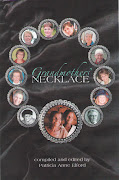
Yesterday I received a package containing a copy of Grandmothers’ Necklace where two of my poems appear: one about each of my grandmothers.
I tear the padded bag open and am unprepared for the thrill. OMG, as the kids say in text-speak; my chest fills with pride as I search for my entries. There’s one of them on the first page! Knowing You © Ruth Zaryski Jackson 2009. I exhale, read quickly through it and glance at the photo of my paternal grandmother, my Baba. Very nice, though the quality of the photo I sent was poor. Still, the first entry. Good start.
Next, I look for my other one. There it is on page 38 but whoops, my name is misspelled: Zarysky instead of Zaryski. Flash of anger. That was careless of somebody. The editor, the publisher; who to blame? Gradually I relax. I talk to myself. It’s ok, Ruth. It’s correct in the first entry. Maybe they can correct it in future print runs. Just chill.
I forget about the error and focus on the poem. Wash Day © Ruth Zaryski Jackson 2009. Looks fine, though not as prominent on the left side of the book. The old photos of my grandmother and my mother at age 6 are not bad. I read the poem and smile. Not too bad at all.
I’d arranged to meet a couple of old university friends in Toronto last night at the former Park Plaza Hotel Roof Top Lounge, so I tuck a copy of the book in my bag. When I show it to them, they’re impressed. I smile with pride. I’m a writer now and here’s proof.
By the time I roll into bed, after reading a few more pieces in the book, I yawn and expect to be out in a flash. No. The excitement is still bubbling. I enjoy the reruns of the day for several more hours.
I tear the padded bag open and am unprepared for the thrill. OMG, as the kids say in text-speak; my chest fills with pride as I search for my entries. There’s one of them on the first page! Knowing You © Ruth Zaryski Jackson 2009. I exhale, read quickly through it and glance at the photo of my paternal grandmother, my Baba. Very nice, though the quality of the photo I sent was poor. Still, the first entry. Good start.
Next, I look for my other one. There it is on page 38 but whoops, my name is misspelled: Zarysky instead of Zaryski. Flash of anger. That was careless of somebody. The editor, the publisher; who to blame? Gradually I relax. I talk to myself. It’s ok, Ruth. It’s correct in the first entry. Maybe they can correct it in future print runs. Just chill.
I forget about the error and focus on the poem. Wash Day © Ruth Zaryski Jackson 2009. Looks fine, though not as prominent on the left side of the book. The old photos of my grandmother and my mother at age 6 are not bad. I read the poem and smile. Not too bad at all.
I’d arranged to meet a couple of old university friends in Toronto last night at the former Park Plaza Hotel Roof Top Lounge, so I tuck a copy of the book in my bag. When I show it to them, they’re impressed. I smile with pride. I’m a writer now and here’s proof.
By the time I roll into bed, after reading a few more pieces in the book, I yawn and expect to be out in a flash. No. The excitement is still bubbling. I enjoy the reruns of the day for several more hours.
Valentine's Memories

We did exchange valentines at school. Secret valentines to our crushes and others to our friends. How many did you get? Were you as popular as me? Did you have any secret admirers? It was all about friendship and love and popularity. I didn’t mind the first two, but I hated competing with others for votes. It cheapened the sincerity of friendship for me.
In high school there were Valentine’s Day dances or sock hops. Were they the same as Sadie Hawkins Dances where the girls could ask the boys out? That was a big deal in the 1950s. You were supposed to wait for the boys to ask you. They had the responsibility of walking up to you in hall at school or phoning you to ask for a date. Girls were supposed to be passive and wait for a call. But that social rule was reversed for Sadie Hawkins, and girls could ask the boys. The pressure was excruciating; I may have screwed up my courage a few times to ask someone. Being rejected didn’t make it any easier, even if it made us more empathic.
In 1976 I got married on Valentine’s Day, so now the day is associated with the day my husband and I took our vows. It was a beautiful wedding at our home with all our friends and family. The room was filled with daffodils, love and laughter. When I look back, I remember my naïve hope that it would last; and it has. Not without bumps, sometimes big ones. The memories make Valentines’ Day a very special one for me.
Memoir or Fiction?
On Sunday I attended an inspiring Books and Brunch session sponsored by a local independent book store, Blue Heron Books. Featured speakers were Kim Echlin and Marina Nemat. Despite the fact I hadn’t read either of their most recent books, The Disappeared and Prisoner of Tehran, both speakers moved me deeply and got me thinking.
Kim Echlin’s novel is a love story, a story of loss and longing set amidst the Cambodian genocide of the Pol Pot regime. Admired by the judges for her sensual details and spare prose, it t was shortlisted for the Giller prize in 2009. She spoke to the group of choosing to bear witness to the Cambodian horrors and family impacts of the killings by making it the backdrop for her fictional characters. A choice to write fiction.
Marina Nemat’s shocking memoir is a true tale of her imprisonment at the age of 16 by the Khomeini regime in Iran. She was tortured, beaten, forced to marry her torturer. She suffered beyond belief, yet survived to tell the story. I was almost in tears as she spoke. But, I wondered, when she had to steel herself psychologically in order to survive, how much of the detail can she honestly remember? I know she writes a disclaimer that she’s done her best. The rules for memoir now include using dialogue and other techniques of fiction writing. I was so moved by her story and determination to speak out against oppression wherever it occurs. Still I wondered about choosing to write a memoir. Did she ever consider writing it as fiction?
As I think about my own story, I wonder about the difference between fiction and memoir, and how do you choose the best form for your story? Do you write a healing memoir as Marina has done, remembering as best you can after a traumatic experience and adding dialogue to make the story interesting? Or do you write your story as fiction, still telling the story you intended to tell, but without the constraints of a memoir format?
Kim Echlin’s novel is a love story, a story of loss and longing set amidst the Cambodian genocide of the Pol Pot regime. Admired by the judges for her sensual details and spare prose, it t was shortlisted for the Giller prize in 2009. She spoke to the group of choosing to bear witness to the Cambodian horrors and family impacts of the killings by making it the backdrop for her fictional characters. A choice to write fiction.
Marina Nemat’s shocking memoir is a true tale of her imprisonment at the age of 16 by the Khomeini regime in Iran. She was tortured, beaten, forced to marry her torturer. She suffered beyond belief, yet survived to tell the story. I was almost in tears as she spoke. But, I wondered, when she had to steel herself psychologically in order to survive, how much of the detail can she honestly remember? I know she writes a disclaimer that she’s done her best. The rules for memoir now include using dialogue and other techniques of fiction writing. I was so moved by her story and determination to speak out against oppression wherever it occurs. Still I wondered about choosing to write a memoir. Did she ever consider writing it as fiction?
As I think about my own story, I wonder about the difference between fiction and memoir, and how do you choose the best form for your story? Do you write a healing memoir as Marina has done, remembering as best you can after a traumatic experience and adding dialogue to make the story interesting? Or do you write your story as fiction, still telling the story you intended to tell, but without the constraints of a memoir format?
Doubts Creep In
My memoir writing has stalled this week in spite of my January 1st resolutions. When I look back at myself in high school, I see one turning point that I can perhaps finesse into a story. Other events occurred outside of school and are not in the yearbooks; jobs I held, family events, social interactions all influenced me. School life dominated during those years and I only have one story. Maybe this exercise was a waste of time? I seem to have doubts now in spite of my determination to continue writing.
Last Saturday I attended a master class workshop at the Richmond Hill library with Barry Dempster. That’s when the questioning crept in. We were asked to bring 1 page from our current project. I brought my opening page (rough 1st draft) from my memoir to a group of strangers. We broke into small groups, read and gave feedback to each other. Parts that I thought were clear were questioned. Parts that had even been published were questioned. Gone was the gentle nurturing of my Writers Group, with negatives cradled in positives. This was the reaction of the anonymous ‘reader’ who just picks up your book and flips through, reading the first page in order to decide whether to buy it. I’m still feeling wounded from that experience. I knew what I meant. It just didn’t come across clearly to them. I thought I was ‘showing’, they thought I was ‘telling’. I know in my head that good writing is 90% rewriting, but negative feedback hurts, the way criticism of our children hurts. We take it personally.
I know what I have to do. Take their comments into account. Revise. But only after I finish my first draft. So, butt back in the chair. Return to my agenda for my book. Put the comments into perspective. There were some positives though I forget what they were right now. Just get on with it, Ruth!
Last Saturday I attended a master class workshop at the Richmond Hill library with Barry Dempster. That’s when the questioning crept in. We were asked to bring 1 page from our current project. I brought my opening page (rough 1st draft) from my memoir to a group of strangers. We broke into small groups, read and gave feedback to each other. Parts that I thought were clear were questioned. Parts that had even been published were questioned. Gone was the gentle nurturing of my Writers Group, with negatives cradled in positives. This was the reaction of the anonymous ‘reader’ who just picks up your book and flips through, reading the first page in order to decide whether to buy it. I’m still feeling wounded from that experience. I knew what I meant. It just didn’t come across clearly to them. I thought I was ‘showing’, they thought I was ‘telling’. I know in my head that good writing is 90% rewriting, but negative feedback hurts, the way criticism of our children hurts. We take it personally.
I know what I have to do. Take their comments into account. Revise. But only after I finish my first draft. So, butt back in the chair. Return to my agenda for my book. Put the comments into perspective. There were some positives though I forget what they were right now. Just get on with it, Ruth!
High School Yearbooks Part 2: 1957 - 1960 Northview Collegiate
At this time I had more friends and enjoyed a more balanced social and academic life. I still wasn’t dating anyone and didn’t have a regular boyfriend. I didn’t see the need for one. My Latin and Ancient History teacher was my home room teacher and I enjoyed his dry wit and intelligence. I gave up the team sports activities and concentrated on my studies and the drama club. In Grade 12, I won Second prize for “This He Believed”, an essay I wrote about loss, hope and new beginnings.

After I graduated from Grade 13 in 1960, I thought I was going to study modern languages at University of Toronto. Instead I went into an Honours Arts course and majored in Anthropology. Another chapter began.
High School Yearbooks Part 1: 1955 - 1957 Downsview Collegiate
I spent this morning skimming through old high school yearbooks looking for clues to myself, an emerging self, during my middle teen-age years. I’m searching for triggers for stories or turning points that illustrate the emotional development of my protagonist, i.e., me.
My high school life clearly reflected 1950s growth in North York, a suburb of Toronto. My friend Sandy, one year ahead of me, went to Bathurst Heights where they had a split-shift system to accommodate everyone while another high school was being built. When I was ready for Grade 9, Downsview Collegiate opened, though construction was still going on for the gymnasium and pool. After Grade 10 we moved to another new school, Northview Heights, where I completed high school.
My Grade 9 profile in the first yearbook almost escaped my glance. I appear in a photo of the Grade 9 Volleyball Champion team, curly-haired, smiling and tallest, in my blue romper-style gym-suit, cutoff sleeves the only hint of rebellion. I see the red-haired object of my silent crush in a photo of the Midget Basketball team. I seem to recall being in the Junior Choir but don't recognize myself in the photo until after I find my name listed in an old programme for Variety Night, held April 27-28, 1956.
My Grade 10 profile didn’t change much. Junior Basketball Champions photo very similar to grade 9’s. Still smiling nervously. Though I remember going, no mention of my name on the Junior Volleyball Jamboree team that went to George Harvey and lost. I see pictures of boys that liked me but I had no interest in. I do remember going to school dances but never had a boyfriend and never went to the proms. Not many Grade 9 and 10ers did.
By Grade 11, at a new school with an upbeat atmosphere, I believe I made a conscious resolve to be less shy and more involved in school life. I joined the Drama Club!
My high school life clearly reflected 1950s growth in North York, a suburb of Toronto. My friend Sandy, one year ahead of me, went to Bathurst Heights where they had a split-shift system to accommodate everyone while another high school was being built. When I was ready for Grade 9, Downsview Collegiate opened, though construction was still going on for the gymnasium and pool. After Grade 10 we moved to another new school, Northview Heights, where I completed high school.
My Grade 9 profile in the first yearbook almost escaped my glance. I appear in a photo of the Grade 9 Volleyball Champion team, curly-haired, smiling and tallest, in my blue romper-style gym-suit, cutoff sleeves the only hint of rebellion. I see the red-haired object of my silent crush in a photo of the Midget Basketball team. I seem to recall being in the Junior Choir but don't recognize myself in the photo until after I find my name listed in an old programme for Variety Night, held April 27-28, 1956.
My Grade 10 profile didn’t change much. Junior Basketball Champions photo very similar to grade 9’s. Still smiling nervously. Though I remember going, no mention of my name on the Junior Volleyball Jamboree team that went to George Harvey and lost. I see pictures of boys that liked me but I had no interest in. I do remember going to school dances but never had a boyfriend and never went to the proms. Not many Grade 9 and 10ers did.
By Grade 11, at a new school with an upbeat atmosphere, I believe I made a conscious resolve to be less shy and more involved in school life. I joined the Drama Club!
Experiencing Memory
I have been thinking about how I experience my memories.
If I close my eyes, I can picture my old Charles Street neighbourhood as it was in the 1940s. My house is still standing, though altered, and transformed lately into The Gourmet Burger. The urban streetscape has changed drastically. In my mind I still see the row of narrow attached houses across the street, with English basements and steps up to the front stoop. I see the lane behind the stores on Yonge Street. I see the Sweet Caps sign painted on the brick wall far above the little grocery store at the corner. I see the chunky apartment building at the corner of St. Nicholas, a woman tossing coins down to us from the heavy railed balcony. I can visualize different houses on the street, the oversized Romanesque-style Victorian like ours, smaller row houses, and ones with large front porches. I see myself walking to Wellesley Street School, down the cobblestones on St Nicholas Lane, walled with furniture warehouses at the bottom behind Rawlinson’s near Wellesley Street. I even had visual memories stored in my head that I only recognized years later when I was a student at University of Toronto. I would come upon an archway at the end of St. Mary’s Street, a stone facade or a street scene and remember being there as a child. Old photographs whether archival or personal help me to cue and elaborate scenes. Talking to my mother and brother help a little.
My recollection of sounds is mainly an ear for accents in speech. I can be transported back to the rooming house in an instant if I hear a Scottish accent or an Irish ballad. These voices of my childhood have stuck deep inside my head. Other sounds of the neighbourhood can be retrieved when necessary but it is a more conscious effort. Music can be a good trigger for scenes.
I have a few kinesthetic memories of the touch of someone or the texture of a rose petal but for the most part I have to think about these before I write about them. Taking the time to focus on the sensation of touch requires effort for me.
Tastes are not strong memory triggers for me. When they are, the memory is related to a particular scene, e.g. eating a new food, the taste of Ukrainian cooking or my mother’s baking. I almost never eat butter tarts because Mom’s were so good.
Smells and memory do interact for me. The smell of lilacs conjures up scenes from my childhood in a flash: picking lilacs, Sadie’s talcum powder, my April birthday, Dad’s digging up clumps and planting them in the backyard. I think of the smell of spices, the smell of baking, and the smell of certain foods. A lot of memories come flooding back given the right scent.
I experience most of my memories visually, like a little movie projector playing in my head. While this is my dominant mode, I do remember some scenes through my other four senses. When writing, I try to scan all five for sensual details.
If I close my eyes, I can picture my old Charles Street neighbourhood as it was in the 1940s. My house is still standing, though altered, and transformed lately into The Gourmet Burger. The urban streetscape has changed drastically. In my mind I still see the row of narrow attached houses across the street, with English basements and steps up to the front stoop. I see the lane behind the stores on Yonge Street. I see the Sweet Caps sign painted on the brick wall far above the little grocery store at the corner. I see the chunky apartment building at the corner of St. Nicholas, a woman tossing coins down to us from the heavy railed balcony. I can visualize different houses on the street, the oversized Romanesque-style Victorian like ours, smaller row houses, and ones with large front porches. I see myself walking to Wellesley Street School, down the cobblestones on St Nicholas Lane, walled with furniture warehouses at the bottom behind Rawlinson’s near Wellesley Street. I even had visual memories stored in my head that I only recognized years later when I was a student at University of Toronto. I would come upon an archway at the end of St. Mary’s Street, a stone facade or a street scene and remember being there as a child. Old photographs whether archival or personal help me to cue and elaborate scenes. Talking to my mother and brother help a little.
My recollection of sounds is mainly an ear for accents in speech. I can be transported back to the rooming house in an instant if I hear a Scottish accent or an Irish ballad. These voices of my childhood have stuck deep inside my head. Other sounds of the neighbourhood can be retrieved when necessary but it is a more conscious effort. Music can be a good trigger for scenes.
I have a few kinesthetic memories of the touch of someone or the texture of a rose petal but for the most part I have to think about these before I write about them. Taking the time to focus on the sensation of touch requires effort for me.
Tastes are not strong memory triggers for me. When they are, the memory is related to a particular scene, e.g. eating a new food, the taste of Ukrainian cooking or my mother’s baking. I almost never eat butter tarts because Mom’s were so good.
Smells and memory do interact for me. The smell of lilacs conjures up scenes from my childhood in a flash: picking lilacs, Sadie’s talcum powder, my April birthday, Dad’s digging up clumps and planting them in the backyard. I think of the smell of spices, the smell of baking, and the smell of certain foods. A lot of memories come flooding back given the right scent.
I experience most of my memories visually, like a little movie projector playing in my head. While this is my dominant mode, I do remember some scenes through my other four senses. When writing, I try to scan all five for sensual details.
How I Lost My Voice
I’m thinking about the child I was when I moved to the suburbs. I was nearly 10. I remembered the feeling of 10 for a long time afterwards. I was able to tap into those feelings of frustration and powerlessness, sometimes without even trying. But now when I try to get back to my 10 year old voice, I struggle. When did I lose the ability to transport myself back? What caused me to stop remembering? How did I lose that connection to what’s been called my ‘inner child’? Where did I lose my child’s voice? These are tough questions that I really don’t want to delve into.
I once read the advice: write toward what you want to know using all your senses. I forget whose suggestion it was. So I will try to write towards my child's voice and tell the stories, some of them already written, in the voice of that child. Maybe by writing my way into the character who is me, I will rediscover that part of myself.
I start with the new house and put myself in it. Now what? Just start writing. Something. Anything just use all your senses. Here goes...
I’m not sure when this is. I can see us around the kitchen table. I can feel the vinyl sticking to my legs on the kitchen chair. We're having supper. Mom is standing with her apron on, back to the stove serving pork chops from the old frying pan that fell off the Eaton’s truck on the lane behind our house on Charles Street. I remember when it happened but the boys don’t. They remember nothing of our old life on Charles Street. Dad is chomping away enthusiastically on his food while Jim has just polished off his potatoes and is asking for another helping. I glare at my brothers and Dad eyes me from the other end of the table. Mom doesn’t notice and doles out seconds to Jim. There’s not much conversation just 'pass the butter' or 'I need a spoon'. Mom’s face is flushed and she cuts her meat while the rest of us scrape our plates. No one asks me about my day. No one asks me if I’m happy here. If I offer something about school, my parents listen with interest but only if it’s positive. When I complain about a teacher, Mom runs to his defence and points out all I have to be grateful for. I quickly learn to bite my tongue and keep it all inside.
I once read the advice: write toward what you want to know using all your senses. I forget whose suggestion it was. So I will try to write towards my child's voice and tell the stories, some of them already written, in the voice of that child. Maybe by writing my way into the character who is me, I will rediscover that part of myself.
I start with the new house and put myself in it. Now what? Just start writing. Something. Anything just use all your senses. Here goes...
I’m not sure when this is. I can see us around the kitchen table. I can feel the vinyl sticking to my legs on the kitchen chair. We're having supper. Mom is standing with her apron on, back to the stove serving pork chops from the old frying pan that fell off the Eaton’s truck on the lane behind our house on Charles Street. I remember when it happened but the boys don’t. They remember nothing of our old life on Charles Street. Dad is chomping away enthusiastically on his food while Jim has just polished off his potatoes and is asking for another helping. I glare at my brothers and Dad eyes me from the other end of the table. Mom doesn’t notice and doles out seconds to Jim. There’s not much conversation just 'pass the butter' or 'I need a spoon'. Mom’s face is flushed and she cuts her meat while the rest of us scrape our plates. No one asks me about my day. No one asks me if I’m happy here. If I offer something about school, my parents listen with interest but only if it’s positive. When I complain about a teacher, Mom runs to his defence and points out all I have to be grateful for. I quickly learn to bite my tongue and keep it all inside.
Subscribe to:
Posts (Atom)


 Posts
Posts