Here is a post by Jerry Waxler that poses the question about writing your parents' memoir? I wonder if this is a necessary step to writing our own?
Is this the year to write your parent’s memoir?
Copyright © 2012, Ruth Zaryski Jackson
Showing posts with label family history. Show all posts
Showing posts with label family history. Show all posts


Remembering How War Affected My Family
It was Remembrance Day on Friday in Canada and Veteran’s Day in the United States. I imagine many bloggers posted about their personal connections to soldiers and war heroes from battles world wide. My family lacks a strong military tradition and yet I choke up every November 11th when I hear “And The Band Played Waltzing Matilda”. That song more than any other conjures up the senselessness of war and its inevitability. A sense of loss haunts me.
My father, Jakiem (Jack) Zaryski grew up in a war zone. Born in 1911 in Kasperivtsi, a small village in Western Ukraine, he remembered soldiers of all stripes marching back and forth through the village during his childhood in World War One. Families were forced to billet soldiers and were subjected to their abuses. His mother was shot in the hip by a trigger-happy German when she stooped to pick up a fallen door knob. Dad spent hours hiding in root-cellars when the shelling was heavy and playing war games with other children when the activity subsided. He began to smoke at age ten and later developed a stomach ulcer. You can be sure he was affected by this early trauma and his anxieties, in all likelihood, were passed down to his children.
During this time my paternal grandfather, Joseph Zaryski was conscripted by the Austro-Hungarian Army around 1914 and spent six years fighting on the Eastern Front then later working in Vienna during the subsequent civil uprisings in Ukraine. I know nothing of his military record, only that he would have been the lowliest foot soldier and fodder for the enemy. How he managed to return unscathed is a mystery I will never unravel. My grandfather never shared his war stories with my father. They are lost forever.
 |
| Joseph Zaryski c. 1920 |
During World War Two my father was in Canada, married with a child, me. He never wanted to go to war after what he had witnessed in his childhood. Instead he chose to go to work on the Alaska Highway being built by the United States as a defense to any attack from the east. Perhaps he felt he was doing his patriotic best. His absence during my early life left its mark on me.
On my mother’s side her youngest brother Leon and a brother-in-law enlisted during World War Two. I was born in 1941 so my only memory is of the two uncles staying with us at different times as they passed through Toronto en route to training camp or returning from overseas. My only war time memories are of Yonge Street parades, rationing tickets for butter and meat and the fact that there weren’t many service aged men around the streets in my neighbourhood of downtown Toronto. That and the absence of my father when I was a toddler.
In my husband’s family many more men served their country. His father Ray Jackson was only 17 when he enlisted in World War One. A strong surge of patriotism and obligation swept the country and made young men feel the need to go to war to defeat ‘the Hun’. He served in France, was shot in the shoulder, and spent years recovering in a military hospital in England in the pre-penicillin age. His wounds never stopped bothering him and he never spoke of his experience.
My husband’s mother had two brothers who served at the same time during World War One. Her favourite, Bill Skilling, enlisted in the army and as a university graduate, was sent to Oxford for officer training. As a Second Lieutenant he was assigned to artillery (Canadian Expeditionary Force, British Expeditionary Force, Royal Field Artillery) as a Forward Observation Officer. In 1917 in France after the first phase of the Third Battle of Ypres (The Battle of Passchendaele), Bill collapsed on the field and was taken to hospital in England. He was sent home three years later depressed and with a badly damaged heart which eventually killed him prematurely. He never married because of his health.
When the war broke out, my mother-in-law’s other brother Harold enlisted in the 5th Field Ambulance Corps as a stretcher bearer. After being seriously wounded at the Battle of the Somme in 1916 he was sent to England. When he recovered he transferred to the Royal Flying Corps but never flew a mission because the war ended just as his training finished. I don’t know how the war affected Uncle Harold. He never spoke of it to us. But when he returned to Canada, he broke up with his high-school sweetheart who'd stayed faithful, and never explained his actions.
How did war affect my family? I'm grateful we didn't lose anyone close, like so many families. But it's a loaded question. We know that some family members were traumatized by war. We do know that trauma can lead to personality changes and behaviors that seem normal, but can be traced to terrible events suffered particularly in childhood or at an impressionable period of life. Their trauma in turn affects their spouses, children and grandchildren. The ripple effect steadily moves through the generations.
How has war affected your family?
How has war affected your family?
For more on Bill and Harold Skilling, see my other blog: http://www.skillingfamilymemories.blogspot.com/
“Perhapsing” Cleopatra: Ideas for Speculating About My Grandmother’s Life
I have just finished reading “Cleopatra: A Life” by Stacy Schiff and her style has given me some ideas about writing about my grandmother’s life.
![]() The content of their lives could not have differed more. Cleopatra, born in 69 B.C., a queen at 18, ruler of Egypt for 22 years, lover of two of the most famous men in history, Julius Caesar and Mark Antony, she amassed wealth beyond imagination.
The content of their lives could not have differed more. Cleopatra, born in 69 B.C., a queen at 18, ruler of Egypt for 22 years, lover of two of the most famous men in history, Julius Caesar and Mark Antony, she amassed wealth beyond imagination.
My grandmother, Marya Huckan Zarecka, an illiterate Ukrainian peasant woman born in 1880 in Repuzhintsy, a small village in Bukovina, daughter of a mayor, was married off to a poor and unstable husband and sent to homestead in the wilds of Canada. Both women were mothers, the only similarity. About both, little was passed down apart from stories and myth.
Using detailed research and a lot of speculation, Schiff tells a brilliant story about Cleopatra’s life. Her book could have been titled: “Perhapsing Cleopatra”. She provides a master lesson in imagining and detailing a life where few facts survived.
My grandmother lived a quiet life, out-shadowed by her disruptive husband. She kept a low profile to avoid his wrath and encouraged her children to do likewise. Not many stories about her were passed down, and if they were, consisted of vague remarks like “ oh, she was wonderful”, but with few meaty details.
I realized after reading "Cleopatra A Life" that I did in fact possess enough information about my grandmother from photos, interviews with my mother and other siblings and cousins, and my grandfather’s hospital records to tell her story using the same techniques that Stacy Schiff used to bring Cleopatra to life. I went back to Schiff’s book and looked for phrases and words she used to recreate colourful, textured scenes and speculate about feelings and motives.
Besides the word perhaps, some other words and phrases used to fill out her story were: maybe, suppose, wonder, imagine, we don’t know if, what if, what she didn’t know, possibly, might have/could have/must have, perchance, suggests, no doubt she…, it seems as if…, she had no choice but to…, these might have been the possibilities, it is likely/unlikely, there is no reason to assume/we can safely assume, it would have been…, we have no proof that…, and so on.
Just as Stacy Schiff reconstructed Cleopatra’s life, I can now tell my Baba’s story by using conjecture and guesses to assess shrewdly her probable and possible motives and hypothesize what she was thinking and feeling decades ago.
(For tips on speculating, see Lisa Knopp's Brevity craft essay: "Perhapsing": The Use of Speculation in Creative Nonfiction.)

My grandmother, Marya Huckan Zarecka, an illiterate Ukrainian peasant woman born in 1880 in Repuzhintsy, a small village in Bukovina, daughter of a mayor, was married off to a poor and unstable husband and sent to homestead in the wilds of Canada. Both women were mothers, the only similarity. About both, little was passed down apart from stories and myth.
Using detailed research and a lot of speculation, Schiff tells a brilliant story about Cleopatra’s life. Her book could have been titled: “Perhapsing Cleopatra”. She provides a master lesson in imagining and detailing a life where few facts survived.
My grandmother lived a quiet life, out-shadowed by her disruptive husband. She kept a low profile to avoid his wrath and encouraged her children to do likewise. Not many stories about her were passed down, and if they were, consisted of vague remarks like “ oh, she was wonderful”, but with few meaty details.
I realized after reading "Cleopatra A Life" that I did in fact possess enough information about my grandmother from photos, interviews with my mother and other siblings and cousins, and my grandfather’s hospital records to tell her story using the same techniques that Stacy Schiff used to bring Cleopatra to life. I went back to Schiff’s book and looked for phrases and words she used to recreate colourful, textured scenes and speculate about feelings and motives.
Besides the word perhaps, some other words and phrases used to fill out her story were: maybe, suppose, wonder, imagine, we don’t know if, what if, what she didn’t know, possibly, might have/could have/must have, perchance, suggests, no doubt she…, it seems as if…, she had no choice but to…, these might have been the possibilities, it is likely/unlikely, there is no reason to assume/we can safely assume, it would have been…, we have no proof that…, and so on.
Just as Stacy Schiff reconstructed Cleopatra’s life, I can now tell my Baba’s story by using conjecture and guesses to assess shrewdly her probable and possible motives and hypothesize what she was thinking and feeling decades ago.
(For tips on speculating, see Lisa Knopp's Brevity craft essay: "Perhapsing": The Use of Speculation in Creative Nonfiction.)
Back To My Memoir
By now most of you will be wondering when I’m going to stop writing about my great-aunt Lena. Between Christian Cassidy's research and my own, we have exhausted the topic. Apart from some LDS research I need to do before erecting a monument on her grave at Brookside Cemetery, I’m finished. We now know far more about her life and death than we ever did before. This exercise illustrates the amount of detail that can be gleaned from genealogical, archival and geographical research to bring to life the characters of your memoir. The family photos, news coverage from the fire and a lot of 'perhapsing' resulted in a real person coming to life on the page. I will leave this topic for now and move back to my memoir which has been lying fallow these many months.
After writing the first draft of what I thought was the first two thirds of my story, I got stuck on where and how to end it. I played around with various possibilities but nothing felt right to me. Advice from my writing pals and teacher didn't help either. The unexpected death of our daughter Milo in May 2010 and other family demands crowded in on my writing time. I distracted myself with genealogical research on my husband's family and setting up another blog. I even considered chucking my memoir!
 A few weeks ago when playing on Facebook or Twitter, I can't remember quite how, I came upon the website of James FitzGerald, a Toronto author and journalist. I then connected to the Random House site where the first chapter of his latest book, WHAT DISTURBS OUR BLOOD is available. The power of his voice knocked me out. I could see how he deftly braided together the threads of a complex (far more so than mine) family and personal memoir as well as a medical history of his prominent grandfather and father told from the voice of the boy, himself. Suddenly, I could see a way forward for my story.
Now I'm writing again and it will be in my voice, my style, my weaving of the threads of my own story. You never know where the inspiration will come from. Just keep reading. The writing will follow.
Copyright © 2011, Ruth Zaryski Jackson
After writing the first draft of what I thought was the first two thirds of my story, I got stuck on where and how to end it. I played around with various possibilities but nothing felt right to me. Advice from my writing pals and teacher didn't help either. The unexpected death of our daughter Milo in May 2010 and other family demands crowded in on my writing time. I distracted myself with genealogical research on my husband's family and setting up another blog. I even considered chucking my memoir!
Now I'm writing again and it will be in my voice, my style, my weaving of the threads of my own story. You never know where the inspiration will come from. Just keep reading. The writing will follow.
Copyright © 2011, Ruth Zaryski Jackson
My Obsession With My Great-Aunt Lena
Copyright © 2011, Ruth Zaryski Jackson
 |
| Lena Huckan Winnipeg c. 1914 |
My obsession with my great-aunt Lena has been contagious. Christian Cassidy, a local historian and Winnipeg blogger, has picked up the family story of my great-aunt Lena's death in a hotel fire in Winnipeg on February 5, 1918. He has written a four part piece on the anniversary of the fire and posted his research, with newly discovered photographs from the Manitoba Archives, on one of his captivating blogs called West End Dumplings. I am very grateful to him for uncovering this additional information and publishing her sad story to a wider audience. Thank you Christian!
Copyright © 2011, Ruth Zaryski Jackson
Tracing Lena Huckan – Part One (Ben Nevis House) Guest Post by Christian Cassidy (This Was Winnipeg)
After writing my "Letters to a Dead Great-Aunt" series, I made the acquaintance of Christian Cassidy, a local Winnipeg historian who writes several blogs. He offered to do some additional research for me in Winnipeg to uncover more about the life and death of my Great-Aunt Michalena in a hotel fire in 1918. Here in his guest post is Part One, based on information found in the 1915 Henderson Directory for Winnipeg. Lena was listed as living in Ben Nevis House at 42 Dagmar Street.
Tracing Lena Huckan
Ben Nevis House

The name "Ben Nevis House" (named for the highest mountain in Great Britain) does not appear in ads until June 1907.

An advertisement in 1917 says that Ben Nevis House is the "first house from Notre Dame". If that is the case then this is a picture of Lena‟s neighbourhood circa 1903. It's a photo looking up Notre Dame FROM Dagmar so that would be her streetcar, taking her to and from the city core.
Could Lena have worked at Ben Nevis as well as live there, similar to what she did (later) at the Riverview (Hotel)? Ben Nevis House routinely had ads similar to this in the papers. From March 14, 1913:
Ben Nevis House was a regular advertiser and not just with little classified ads but larger ones in amongst city hotels; so it may have been a little high end, perhaps out of Lena's price range.
Other mentions of Ben Nevis around the time she may have been living there:

Perhaps had some fun while she lived there….
Caledonian Sports Witnessed by Large Crowd at Horse Show Building Last Night. October 5, 1910 MB Free Press
Close on 3,000 people witnessed the first annual Caledonian games at the Horse Show amphitheatre last night. Mixed in with the Scotch music and dancing were the more common athletic sport.
Tug- of war - Caledonians swept everything before them in this contest. They first defeated the Electrical Union team in two straight -pulls and then did the same thing, only more easily, to a team
from the Ben Nevis house.
The Neighbourhood
All of the houses on that first block of Dagmar, and parallel streets, are now gone. That stretch of Notre Dame is fairly commercial with some light industrial and as the Notre Dame buildings expanded, the houses directly behind them disappeared.


These are photos of houses within a couple of blocks of Ben Nevis House and, presumably, would be similar in size or style. Dagmar wasn't noted for being a remarkable street in comparison to the rest of the neighbourhood.
Central Park


Given where she lived, she definitely would have visited Central Park, just a couple of blocks to the south. ( http://winnipegdowntownplaces.blogspot.com/2010/09/downtown-places-central-park.html )
Central Park was one of Winnipeg's first parks. It was originally a natural space, but
by the time she lived there, the park would have boasted tennis courts, a bandshell and the Waddell Fountain. It was a very popular place and you can see the treeline from where she lived.

Some of the old houses and buildings exist around the park. Knox Church (above) was built between 1914 and 1918 (the war interrupted). The Warwick, Winnipeg's first upscale apartment block, was there in 1909. (for more on the Warwick: http://winnipegdowntownplaces.blogspot.com)

One feature that was unveiled in 1914 was the Waddell Fountain. It was an attraction unto itself. This summer, in fact, the fountain was re-installed after a complete rebuild and upgrade.
More on the fountain and the interesting story behind it http://www.gov.mb.ca/chc/hrb/prov/p078.html)
Other period shots of Central Park:
http://peel.library.ualberta.ca/postcards/PC002133.html
Tracing Lena Huckan
Ben Nevis House
In 1903 advertisements begin to appear for "rooms for rent" at 42 Dagmar. At first it was three, then four rooms.


The Morning Telegram -- July 19, 1907
The name "Ben Nevis House" (named for the highest mountain in Great Britain) does not appear in ads until June 1907.

Notre Dame from Dagmar ca. 1903 Source: http://virtual.heritagewinnipeg.com/windowPhoto.php?fileNum=%2002-299&tName=downtown
An advertisement in 1917 says that Ben Nevis House is the "first house from Notre Dame". If that is the case then this is a picture of Lena‟s neighbourhood circa 1903. It's a photo looking up Notre Dame FROM Dagmar so that would be her streetcar, taking her to and from the city core.
Could Lena have worked at Ben Nevis as well as live there, similar to what she did (later) at the Riverview (Hotel)? Ben Nevis House routinely had ads similar to this in the papers. From March 14, 1913:
Classified (Manitoba Free Press)
SMART GIRL WANTED AT ONCE FOR
upstairs and wait table. $20. Ben Nevis House. 42 Dagmar Street.
SMART GIRL WANTED AT ONCE FOR
upstairs and wait table. $20. Ben Nevis House. 42 Dagmar Street.
Ben Nevis House was a regular advertiser and not just with little classified ads but larger ones in amongst city hotels; so it may have been a little high end, perhaps out of Lena's price range.
Other mentions of Ben Nevis around the time she may have been living there:

The Voice -- August 3, 1917
Perhaps had some fun while she lived there….
Caledonian Sports Witnessed by Large Crowd at Horse Show Building Last Night. October 5, 1910 MB Free Press
Close on 3,000 people witnessed the first annual Caledonian games at the Horse Show amphitheatre last night. Mixed in with the Scotch music and dancing were the more common athletic sport.
Tug- of war - Caledonians swept everything before them in this contest. They first defeated the Electrical Union team in two straight -pulls and then did the same thing, only more easily, to a team
from the Ben Nevis house.
The Neighbourhood
All of the houses on that first block of Dagmar, and parallel streets, are now gone. That stretch of Notre Dame is fairly commercial with some light industrial and as the Notre Dame buildings expanded, the houses directly behind them disappeared.

Period House near Bannatyne Ave. and Notre Dame http://www.flickr.com/photos/christiansphotos/5138797512/
There are still pockets of period houses in the neighborhood. 
Period houses on Bannatyne Ave http://www.flickr.com/photos/christiansphotos/5138186391
These are photos of houses within a couple of blocks of Ben Nevis House and, presumably, would be similar in size or style. Dagmar wasn't noted for being a remarkable street in comparison to the rest of the neighbourhood.
Central Park

Central Park ca. 1918 http://www.virtual.heritagewinnipeg.com/windowPhoto.php?fileNum=%2002-194&tName=downtown

Street around Central Park ca. 1912 http://www.virtual.heritagewinnipeg.com/windowPhoto.php?fileNum=%2002-071&tName=downtown
Given where she lived, she definitely would have visited Central Park, just a couple of blocks to the south. ( http://winnipegdowntownplaces.blogspot.com/2010/09/downtown-places-central-park.html )
Central Park was one of Winnipeg's first parks. It was originally a natural space, but
by the time she lived there, the park would have boasted tennis courts, a bandshell and the Waddell Fountain. It was a very popular place and you can see the treeline from where she lived.

Some of the old houses and buildings exist around the park. Knox Church (above) was built between 1914 and 1918 (the war interrupted). The Warwick, Winnipeg's first upscale apartment block, was there in 1909. (for more on the Warwick: http://winnipegdowntownplaces.blogspot.com)

One feature that was unveiled in 1914 was the Waddell Fountain. It was an attraction unto itself. This summer, in fact, the fountain was re-installed after a complete rebuild and upgrade.
More on the fountain and the interesting story behind it http://www.gov.mb.ca/chc/hrb/prov/p078.html)
Other period shots of Central Park:
http://peel.library.ualberta.ca/postcards/PC002133.html
Copyright © 2010, Christian Cassidy for Ruth Zaryski Jackson
Building the Alaska Highway: Dad's Story
Last Thursday on Remembrance Day I planned to write about my Dad’s contribution to the war effort, building the Alaska Highway. My parents, married in October 1939 just weeks after WW11 broke out, were living and working in Toronto. By 1940 in Canada conscription had been introduced for home defence and Dad was worried. After witnessing WW1 as a child in Europe, he had no appetite for active service.
In 1941, months after I was born, my father took a job with Curran and Briggs, a paving and construction company with the first Canadian contract to work on the construction of the Alaska Highway. My father made that decision without consulting my mother, so she was very angry he was going off for a year, leaving her with a newborn baby and a rooming house to manage in downtown Toronto. From his point of view, it was an opportunity to work at his trade as a welder and earn a lot of money. After finishing a welding course at night school, he’d found it difficult to obtain work in his trade in the 1930s and continued to work in the restaurant business out of necessity. He first heard about the job from a friend, Fred Caruk, who owned Master Welding in Port Credit, just west of Toronto. When Dad was offered a chance to work as welder maintaining all machinery and equipment for this paving company, he saw it as a great chance and a bit of an adventure. It also gave him a way of contributing to the war effort.
An Alaska Highway had been proposed and debated in the 1930s, but it wasn’t until fear of a Japanese invasion via Siberia and the Japanese bombing of Pearl Harbour in 1941, that such a road, as a supply route, was thought to be essential for the defence of North America. On February 11, 1942 President Roosevelt officially authorized work to begin by the United States Army Engineer Troops.
According to family lore, my father was already in Alaska by September 1941. He travelled by train from Union Station in Toronto to Edmonton and from there to Dawson Creek, BC. Over the year he would travel with his firm as they advanced construction from Dawson Creek to the highway's middle point. Others were working from Fairbanks, east to the middle point at around Watson Lake.
Working and living conditions were extremely difficult with temperatures ranging from 90 degrees F. to -70 degrees F. Swamps, rivers, ice, cold, mosquitoes, flies and gnats tested the men daily. Most camps were kept open and machinery operated on a 22 hour basis, with 11 hour shifts. Trying to maintain equipment not designed for such conditions, was an ongoing challenge to the creativity of men like my father.
While Dad was in Alaska, Mom would tell me stories about him and read his letters to me. After about a year my dad came home for a two month visit when I was about 18 months old. I have no recollection of his visit in October 1942, only the family story that I cried and clung to him in Union Station when he boarded the train to return.
The highway officially opened November 1942, though improvements continued to be made for months and years later. Dad worked in Alaska for another 4 months before coming home for good in about February 1943, just before I turned two years old.
I have no memory of his return or the events that followed. The story is that he returned with $30,000 and invested it in a business partnership that went sour. The money vanished and Mom continued for another seven years to run the rooming house and save her meager dollars for a down payment on her dream house in the suburbs. Ashamed of his bad judgement and grateful for Mom's forgiveness, my father started his own welding business, Ontario Collision and Welding. He persevered and was successful.
Copyright © 2010, Ruth Zaryski Jackson
In 1941, months after I was born, my father took a job with Curran and Briggs, a paving and construction company with the first Canadian contract to work on the construction of the Alaska Highway. My father made that decision without consulting my mother, so she was very angry he was going off for a year, leaving her with a newborn baby and a rooming house to manage in downtown Toronto. From his point of view, it was an opportunity to work at his trade as a welder and earn a lot of money. After finishing a welding course at night school, he’d found it difficult to obtain work in his trade in the 1930s and continued to work in the restaurant business out of necessity. He first heard about the job from a friend, Fred Caruk, who owned Master Welding in Port Credit, just west of Toronto. When Dad was offered a chance to work as welder maintaining all machinery and equipment for this paving company, he saw it as a great chance and a bit of an adventure. It also gave him a way of contributing to the war effort.
 |
| Jack Zaryski Pulling Welding Machine for Curran & Briggs c. 1942 |
An Alaska Highway had been proposed and debated in the 1930s, but it wasn’t until fear of a Japanese invasion via Siberia and the Japanese bombing of Pearl Harbour in 1941, that such a road, as a supply route, was thought to be essential for the defence of North America. On February 11, 1942 President Roosevelt officially authorized work to begin by the United States Army Engineer Troops.
According to family lore, my father was already in Alaska by September 1941. He travelled by train from Union Station in Toronto to Edmonton and from there to Dawson Creek, BC. Over the year he would travel with his firm as they advanced construction from Dawson Creek to the highway's middle point. Others were working from Fairbanks, east to the middle point at around Watson Lake.
 |
| Route of Alaska Highway Govt. of Alberta |
 |
| Jack Zaryski aka. Johnny the Welder |
While Dad was in Alaska, Mom would tell me stories about him and read his letters to me. After about a year my dad came home for a two month visit when I was about 18 months old. I have no recollection of his visit in October 1942, only the family story that I cried and clung to him in Union Station when he boarded the train to return.
The highway officially opened November 1942, though improvements continued to be made for months and years later. Dad worked in Alaska for another 4 months before coming home for good in about February 1943, just before I turned two years old.
 |
| Alaska Highway Dawson Creek, B.C. c. 1940s |
Copyright © 2010, Ruth Zaryski Jackson
Working in Cranberry Portage, Manitoba 1930
My Mother celebrated her 97th birthday a few weeks ago. Still alert and mobile, she says she might now make it to 100! A remarkable feat for someone who never knew as a child if they would have enough to eat. She went to work at fifteen to help the family. In 1930, when she was sixteen, she ended up working in Cranberry Portage, a booming frontier town in northern Manitoba.
In 1928, a devastating forest fire had swept a large part of the old town built of logs and wood. I asked my mother to tell me how she came to work in Cranberry Portage, Manitoba in 1930, just two years after the big fire.
She told me: "jobs just seemed to land in my lap, one after another".
One day she was walking down the street with a friend in Winnipegosis and saw a "Help Wanted" notice in a store window. A woman was looking for a person to come to Cranberry Portage with her family to help cook and look after their three children. Her husband worked at a gravel pit while the woman had a job cooking for a camp of men who worked along the railway track outside of Cranberry Portage. Mom couldn’t remember if it was a mining camp or a lumber camp. Most likely it was a camp for C.N.R. workers who were laying eighty-seven miles of railroad track to a wilderness tent town of Flin Flon. Mrs. Anderson, Mom recalled, was a woman of Polish and Icelandic descent. While Mom worked for her for about a month, they lived in a tent which was actually a temporary frame building with a canvas roof tied on top.
When Mrs. Anderson no longer needed Mom, she was offered a job at the Redwing Café Store Bakery as a waitress and helper, replacing a Swedish nineteen year old boy who had gone home for a month. After a month, Mom was asked to stay on, and the other hired girl left to help relatives who had just come to town to open a restaurant.
"Hutch" and his family owned the café. His wife was Norwegian or Swedish from Seattle, Washington and his mother also lived with them. Mom recalls she worked there for three or four months. She knows for sure she was there for her seventeenth birthday on October 23rd. Likely she went for the summer season in June or July and left in November.
When I think about what I was doing at age sixteen or seventeen, or what my children and grandchildren are doing, I think my mother was courageous to take a job so far from her home in Sclater, Manitoba and go to a northern town full of mostly men of a hundred different nationalities. She set the adventure bar high for all of us and we are so grateful. Happy Birthday, Mom.
Copyright © 2010, Ruth Zaryski Jackson
In 1928, a devastating forest fire had swept a large part of the old town built of logs and wood. I asked my mother to tell me how she came to work in Cranberry Portage, Manitoba in 1930, just two years after the big fire.
She told me: "jobs just seemed to land in my lap, one after another".
One day she was walking down the street with a friend in Winnipegosis and saw a "Help Wanted" notice in a store window. A woman was looking for a person to come to Cranberry Portage with her family to help cook and look after their three children. Her husband worked at a gravel pit while the woman had a job cooking for a camp of men who worked along the railway track outside of Cranberry Portage. Mom couldn’t remember if it was a mining camp or a lumber camp. Most likely it was a camp for C.N.R. workers who were laying eighty-seven miles of railroad track to a wilderness tent town of Flin Flon. Mrs. Anderson, Mom recalled, was a woman of Polish and Icelandic descent. While Mom worked for her for about a month, they lived in a tent which was actually a temporary frame building with a canvas roof tied on top.
 |
| Mrs. Harry Anderson Cranberry Portage, MB 1930 |
When Mrs. Anderson no longer needed Mom, she was offered a job at the Redwing Café Store Bakery as a waitress and helper, replacing a Swedish nineteen year old boy who had gone home for a month. After a month, Mom was asked to stay on, and the other hired girl left to help relatives who had just come to town to open a restaurant.
 |
| My mother, Jean Zaretsky far right, Petersen/Schamerhorn family, owners of Redwing Cafe Store Bakery, Cranberry Portage, MB 1930 |
"Hutch" and his family owned the café. His wife was Norwegian or Swedish from Seattle, Washington and his mother also lived with them. Mom recalls she worked there for three or four months. She knows for sure she was there for her seventeenth birthday on October 23rd. Likely she went for the summer season in June or July and left in November.
 |
| Jean Zaretsky age 17 Cranberry Portage, MB 1930 |
When I think about what I was doing at age sixteen or seventeen, or what my children and grandchildren are doing, I think my mother was courageous to take a job so far from her home in Sclater, Manitoba and go to a northern town full of mostly men of a hundred different nationalities. She set the adventure bar high for all of us and we are so grateful. Happy Birthday, Mom.
Copyright © 2010, Ruth Zaryski Jackson
The Power of a Family Secret
My personal essay The Power of A Family Secret has now been posted on Allyson Latta's new website. This essay appeared in an earlier version in several blog posts on this site. Please click on the title of my essay or Allyson's name, have a look and let me know what you think.
Copyright © 2010, Ruth Zaryski Jackson
Copyright © 2010, Ruth Zaryski Jackson
Letter to My Dead Great-Aunt Part Three
My mother told me Uncle John didn’t like to spend money but as your next of kin, he would have been the one responsible for your burial. I wondered if he had done nothing to commemorate your life. Maybe your body was never recovered. Maybe he was too overcome with grief. I wished I had asked Auntie Huckan, his wife but I hadn’t known about you then. I wished my mother had asked her but she didn’t think to ask. I found the details of your burial by chance and more details on your Death Certificate.
Armed with the name of the hotel where you died and the exact date of the fire, I pressed on and tried to find a photograph of the building. The Riverview Hotel had been built in 1906 or earlier (Henderson Directory 1906) and a large 1-storey addition of wood construction had been added in 1914. The Winnipeg architect, Charles S. Bridgeman designed it for the owner, J.J. O'Connell in 1913. No photograph was found but an interesting discovery showed up in the city records.
Negligence
I discovered on the Building Permit for the addition, the owner J.J. O'Connell had on June 11, 1914 been “convicted and reprimanded for not complying with Notice issued January 7, 1914 re Exit doors”. A Building Inspector had deemed the building dangerous four years before the fire! Maybe even before you were hired.
The Historical Buildings Officer for Winnipeg sent me several newspaper clippings about the fire on the night of February 5, 1918 when the Riverview Hotel burned to the ground. Three perished in the fire: a nurse employed by the owner, a veteran of WWI and you, my dear Great-Aunt Michalena, described as “Lena Wuchan, kitchen girl” and “Lena Guchan, kitchen maid”. They couldn’t even spell your name right.
Here’s what happened as I can piece it together from the clippings. Early in the morning on the 5th of February about 3:30 a.m. a fire broke out, possibly in the kitchen of the Riverview Hotel. Fanned by 30 mile an hour gale force winds, the fire quickly spread to nearby buildings. Five fire brigades responded promptly though there were 6-8 other fires in Winnipeg at that night. The Riverview Hotel was leveled within an hour. Total damage was estimated to be $180,000.
A neighbor called the fire department. Everyone was asleep when the alarm bells in each room went off. You were last seen in your room on the second floor. Smoke poured into the rooms and the stairs were blocked by dense smoke. The hotel owner, his wife and six children were sleeping on the first floor and all escaped unharmed except for smoke inhalation. Mr. O’Connell later told the press of the frantic attempts to escape by those who died. I can only try to imagine the terror you felt when you realized there was no way out.
Your body was found in the ashes two days later near the centre of the basement buried several feet beneath the debris. They believed these were your remains because they were found in the location of your room in the building. But you were found in the basement, because all three stories collapsed. Identification of the three victims was based on location of the bodies when found. A fourth victim died later in hospital.
The inquest a week later found no fault lay on the shoulders of the hotel owner or the fire department for the deaths, despite the fact that the building hadn’t been inspected for a year.

And so dear Auntie, this is your story, the evidence that you lived and died in Winnipeg in a tragic hotel fire that cold February night in 1918. There are still some gaps and incomplete knowledge of your short life. I promise you I will continue to search for more details, such as your immigration records and whatever vital records exist in Winnipeg or your ancestral village of Repuzhintsy. My cousins and I will be replacing the numbered stone on your grave with a personal memorial stone. I will honour your life by telling your story to all who will listen. I will never forget you and other immigrants who lost their lives in accidents and unsafe working conditions, trying to build a better life and a brighter future in Canada.
May your soul rest in peace. Vichnaya Pamiat.
love from your Grandniece,
Ruth
Copyright © 2010, Ruth Zaryski Jackson
Armed with the name of the hotel where you died and the exact date of the fire, I pressed on and tried to find a photograph of the building. The Riverview Hotel had been built in 1906 or earlier (Henderson Directory 1906) and a large 1-storey addition of wood construction had been added in 1914. The Winnipeg architect, Charles S. Bridgeman designed it for the owner, J.J. O'Connell in 1913. No photograph was found but an interesting discovery showed up in the city records.
Negligence
I discovered on the Building Permit for the addition, the owner J.J. O'Connell had on June 11, 1914 been “convicted and reprimanded for not complying with Notice issued January 7, 1914 re Exit doors”. A Building Inspector had deemed the building dangerous four years before the fire! Maybe even before you were hired.
The Historical Buildings Officer for Winnipeg sent me several newspaper clippings about the fire on the night of February 5, 1918 when the Riverview Hotel burned to the ground. Three perished in the fire: a nurse employed by the owner, a veteran of WWI and you, my dear Great-Aunt Michalena, described as “Lena Wuchan, kitchen girl” and “Lena Guchan, kitchen maid”. They couldn’t even spell your name right.
 |
| Riverview Hotel 322 Nairn Avenue Elmwood, Manitoba |
A neighbor called the fire department. Everyone was asleep when the alarm bells in each room went off. You were last seen in your room on the second floor. Smoke poured into the rooms and the stairs were blocked by dense smoke. The hotel owner, his wife and six children were sleeping on the first floor and all escaped unharmed except for smoke inhalation. Mr. O’Connell later told the press of the frantic attempts to escape by those who died. I can only try to imagine the terror you felt when you realized there was no way out.
Your body was found in the ashes two days later near the centre of the basement buried several feet beneath the debris. They believed these were your remains because they were found in the location of your room in the building. But you were found in the basement, because all three stories collapsed. Identification of the three victims was based on location of the bodies when found. A fourth victim died later in hospital.
The inquest a week later found no fault lay on the shoulders of the hotel owner or the fire department for the deaths, despite the fact that the building hadn’t been inspected for a year.
 |
| Newspaper Clippings from Winnipeg Firefighters Museum 1918 |

And so dear Auntie, this is your story, the evidence that you lived and died in Winnipeg in a tragic hotel fire that cold February night in 1918. There are still some gaps and incomplete knowledge of your short life. I promise you I will continue to search for more details, such as your immigration records and whatever vital records exist in Winnipeg or your ancestral village of Repuzhintsy. My cousins and I will be replacing the numbered stone on your grave with a personal memorial stone. I will honour your life by telling your story to all who will listen. I will never forget you and other immigrants who lost their lives in accidents and unsafe working conditions, trying to build a better life and a brighter future in Canada.
May your soul rest in peace. Vichnaya Pamiat.
love from your Grandniece,
Ruth
Copyright © 2010, Ruth Zaryski Jackson
Letter to My Dead Great-Aunt Part Two
The family story I heard from Mother and her sister Anne is that you were working at a hotel in Winnipeg saving your money to be married to your unnamed fiancé in the photograph. When fire broke out, you escaped somehow but ran back in to retrieve your $800 hidden under your mattress. You never came out. Were you overcome by smoke in that firetrap? Did the fire spread much faster than you anticipated? Or were you just a naïve girl who didn’t understand the danger and could only think of your hard-earned savings and your future going up in smoke? Eight hundred dollars in today’s dollars would be a lot of money. Brave or foolish, you lost your life in that fire.
I searched for a long time for your death and burial records. I searched newspapers for reports of a hotel fire but there were many hotel fires in Winnipeg in those days especially in the long cold winters. Photos are legend.
My cousin Ellen and I searched through countless cemetery lists until one day I found an on-line listing of Winnipeg City cemeteries and was able to find a listing for a “Lena Huekow” who died 2/5/1918. Confident this must be you, I contacted the City of Winnipeg who told me that they had no record of a “Michalena Huckan” but did have a “Lena Huckow” buried in Brookside Cemetery. My cousin Edith later confirmed that at last we had found your final resting place right next to the casualties of WW I. Further research revealed the name of the hotel, Riverview, (on the Red River) and the address, 322 Nairn Avenue in Elmwood. Finally I was able to obtain your Death Certificate. I requested the Coroner’s report but the records had been destroyed.
What would it have meant to me if you had lived, Michalena? You might have been like a Baba to me. I never knew my Baba, your sister. She died when I was 2 ½ . I saw her only once when I was 1 ½ and have no memory of the visit or her. You were 13 years younger so I might have known you. Maybe you would have moved to Oshawa where your older brother John lived for many years. He also died before I was born but his wife lived for many years. I knew her well and in fact was named, Frances, after her.
The only photos I have of Baba are taken when she was older, aged and toothless before her time. When I look at photos of my grandmother, your older sister Marya and you, Michalena, I see what she must have looked like as a young girl. I think she must have been as pretty as you when she was a young woman. I feel closer to her somehow. Closer to her youth.
To be continued...
Copyright © 2010, Ruth Zaryski Jackson
I searched for a long time for your death and burial records. I searched newspapers for reports of a hotel fire but there were many hotel fires in Winnipeg in those days especially in the long cold winters. Photos are legend.
 |
| Scott Bathgate - February 15, 1917 K. Elder Collection The Firefighters Museum of Winnipeg |
What would it have meant to me if you had lived, Michalena? You might have been like a Baba to me. I never knew my Baba, your sister. She died when I was 2 ½ . I saw her only once when I was 1 ½ and have no memory of the visit or her. You were 13 years younger so I might have known you. Maybe you would have moved to Oshawa where your older brother John lived for many years. He also died before I was born but his wife lived for many years. I knew her well and in fact was named, Frances, after her.
 |
| John Huckan and Frances Ross Huckan Winnipeg, Manitoba c. 1914 |
The only photos I have of Baba are taken when she was older, aged and toothless before her time. When I look at photos of my grandmother, your older sister Marya and you, Michalena, I see what she must have looked like as a young girl. I think she must have been as pretty as you when she was a young woman. I feel closer to her somehow. Closer to her youth.
 |
| Marya Huckan Zarecka Sclater, Manitoba c.1940 |
Copyright © 2010, Ruth Zaryski Jackson
Letter to My Dead Great-Aunt
About two years ago I was inspired by Sheila Nevins to write a letter to my dead Great-Aunt who died tragically in a hotel fire in Winnipeg in 1918. Michalena Huckan, my maternal Baba's much younger sister, immigrated to Canada in @ 1910-11 and was engaged to be married. The family story is that the upper storey of the building collapsed on her when she ran back to retrieve her savings hidden under the mattress. My nearly 97 year old mother still remembers her mother crying for days when she heard the news. Where Michalena was buried became a mystery. She had become a ghost haunting our family.
___________________________________________
Dear Great-Aunt Michelena or maybe I should call you Вуйна,
Ever since I saw your photograph and heard your heart-rending story, I have been obsessed with finding traces of your short life. The journey has been frustrating as women are much harder to track. Invisible threads in our past history. My history.
Michalena, you were about 13 years younger than your older sister, my grandmother Marya Zarecka. Before I knew the exact age difference, I wondered if you might be her illegitimate daughter and the reason behind my grandfather's relentless anger towards his wife. One day I asked my mother timidly if that could be possible. "No!" she stated, "they were sisters." I believe you were.
You were born in 1893 in the village of Repuzhintsy, province of Bukovina when it was part of Roumania, in the Austro-Hungarian Empire. You were 18 when Marya left for Canada to join my grandfather in 1911 with her two children Helena and Anton. Maybe you came with her or followed later. I have not found your immigration records yet.
Your brother Iwan (John) immigrated to Winnipeg with his family in 1914. You went to Winnipeg and, according to the Henderson Directory, by 1916 you were living in Ben Nevis House, a rooming house at 42 Dagmar Street. Like so many hundreds of other young single immigrant women, you were working in one of the many downtown Winnipeg hotels.
I have two studio photographs of Michalena, likely taken after her brother arrived in 1914. In one she is looking very proper, with her fiancé, her brothers Nikolaj, Iwan, his wife and daughter.
Your fiancé is standing beside you in the group photograph. You must have been looking forward to marrying him. You risked your life for the sake of $800 you saved and kept hidden under your mattress. Who was he? We don't even know his name, though most likely he was from your village, Repuzhintsy. Was he heart-broken when he heard the news of your death? Did he ever recover from the loss? Perhaps he married and had children. Where are his descendents now? Would they recognize him in this photograph?
In the other photograph, you stand beside a table, hair flowing , looking very beautiful. I can see that you were a pretty woman, short in stature with long curly brown hair. Your eyes are lighter than brown, blue or hazel perhaps. You are wearing a long sleeved white blouse and a long dark skirt, proper formal female attire for the time. You are wearing no visible jewelry except a pin at the neck of your blouse. Your hands appear to be strong but graceful, holding a small bouquet of flowers.
To be continued...
Copyright © 2010, Ruth Zaryski Jackson
___________________________________________
Dear Great-Aunt Michelena or maybe I should call you Вуйна,
Ever since I saw your photograph and heard your heart-rending story, I have been obsessed with finding traces of your short life. The journey has been frustrating as women are much harder to track. Invisible threads in our past history. My history.
Michalena, you were about 13 years younger than your older sister, my grandmother Marya Zarecka. Before I knew the exact age difference, I wondered if you might be her illegitimate daughter and the reason behind my grandfather's relentless anger towards his wife. One day I asked my mother timidly if that could be possible. "No!" she stated, "they were sisters." I believe you were.
You were born in 1893 in the village of Repuzhintsy, province of Bukovina when it was part of Roumania, in the Austro-Hungarian Empire. You were 18 when Marya left for Canada to join my grandfather in 1911 with her two children Helena and Anton. Maybe you came with her or followed later. I have not found your immigration records yet.
Your brother Iwan (John) immigrated to Winnipeg with his family in 1914. You went to Winnipeg and, according to the Henderson Directory, by 1916 you were living in Ben Nevis House, a rooming house at 42 Dagmar Street. Like so many hundreds of other young single immigrant women, you were working in one of the many downtown Winnipeg hotels.
I have two studio photographs of Michalena, likely taken after her brother arrived in 1914. In one she is looking very proper, with her fiancé, her brothers Nikolaj, Iwan, his wife and daughter.
Your fiancé is standing beside you in the group photograph. You must have been looking forward to marrying him. You risked your life for the sake of $800 you saved and kept hidden under your mattress. Who was he? We don't even know his name, though most likely he was from your village, Repuzhintsy. Was he heart-broken when he heard the news of your death? Did he ever recover from the loss? Perhaps he married and had children. Where are his descendents now? Would they recognize him in this photograph?
 |
| Michalena Huckan, her fiancé, Nikolaj Huckan Franciszka Ross Huckan, Wladzia (Frances), Iwan (John) Huckan Winnipeg, Manitoba c. 1914 |
In the other photograph, you stand beside a table, hair flowing , looking very beautiful. I can see that you were a pretty woman, short in stature with long curly brown hair. Your eyes are lighter than brown, blue or hazel perhaps. You are wearing a long sleeved white blouse and a long dark skirt, proper formal female attire for the time. You are wearing no visible jewelry except a pin at the neck of your blouse. Your hands appear to be strong but graceful, holding a small bouquet of flowers.
 |
| Michalena Huckan Winnipeg, Manitoba c. 1914 |
Copyright © 2010, Ruth Zaryski Jackson
Even More on Family Secrets
After writing these posts I have been asked: “What sorts of things can become a family secret?” The short answer is: anything someone doesn’t want to talk about openly. Certainly there are always private concerns about your family you don’t share with your neighbours or friends. I’m not talking about this type of privacy: something that’s no one's business. But these are not secrets within the family. Everyone knows that old Uncle Harry is like that, whatever “that” is.
I’m talking about secrets that are hidden from others in the family because someone felt shame and thought it best not to talk openly about it. These secrets are then perpetuated down the generations.
What is considered a secret can vary by family, by culture, by ethnicity and by time. These secrets may be health issues e.g. epilepsy or mental retardation which wasn’t widely understood or accepted in the 19th and early 20th century. Or they could be some form of mental illness like schizophrenia or a bi-polar disorder which also wasn’t understood or accepted. Having a sick family member was perceived as a stain on the family and kept hidden.
Other secrets might be accidents or a death of a child if the circumstances were dodgy and the family felt guilty or responsible. Suicides were rarely mentioned but a trail to the truth can be found when Catholics or Greek Catholics were not buried in their own churchyards. Dementia wasn’t accepted by some families. Stories of family addictions, violence, abandonment, sexual abuse or incest were also rarely passed down or, if so, told in a way that diluted or denied any wrongdoing. Illegitimate children, adoption or raising someone else’s child might be kept hidden. Sexual philandering or divorce might be a secret. True sexual orientation might be denied and never discussed.
Sometimes certain hardships e.g. immigration and poverty were considered noble and some families talked about overcoming their humble beginnings. Other immigrants denied their roots and ethnicities, changing or Anglicizing their names when they moved to cities or needed a job.
Family proclivities for thievery or other illegal activities might become a family secret. Jail records or time unaccounted for may have been glossed over in the family story. A successful family might deny the origins of their financial gains during prohibition.
 I heard of another kind of family secret when descendants of a family were trying to figure out their genealogy and family connections to a grandfather who had left a wife who didn't want to emigrate and his children in Europe. The man lived with another woman in Canada and raised a second family. Such a tangled web for his descendants to unravel.
After writing this post, I found a comprehensive piece by Dr. Allan Schwartz which explores Family Secrets. John Bradshaw has also written a book called: FAMILY SECRETS: THE PATH TO SELF-ACCEPTANCE AND REUNION.
I’m sure there are many more kinds of family secrets. Do you have any to add?
I’m talking about secrets that are hidden from others in the family because someone felt shame and thought it best not to talk openly about it. These secrets are then perpetuated down the generations.
What is considered a secret can vary by family, by culture, by ethnicity and by time. These secrets may be health issues e.g. epilepsy or mental retardation which wasn’t widely understood or accepted in the 19th and early 20th century. Or they could be some form of mental illness like schizophrenia or a bi-polar disorder which also wasn’t understood or accepted. Having a sick family member was perceived as a stain on the family and kept hidden.
Other secrets might be accidents or a death of a child if the circumstances were dodgy and the family felt guilty or responsible. Suicides were rarely mentioned but a trail to the truth can be found when Catholics or Greek Catholics were not buried in their own churchyards. Dementia wasn’t accepted by some families. Stories of family addictions, violence, abandonment, sexual abuse or incest were also rarely passed down or, if so, told in a way that diluted or denied any wrongdoing. Illegitimate children, adoption or raising someone else’s child might be kept hidden. Sexual philandering or divorce might be a secret. True sexual orientation might be denied and never discussed.
Sometimes certain hardships e.g. immigration and poverty were considered noble and some families talked about overcoming their humble beginnings. Other immigrants denied their roots and ethnicities, changing or Anglicizing their names when they moved to cities or needed a job.
Family proclivities for thievery or other illegal activities might become a family secret. Jail records or time unaccounted for may have been glossed over in the family story. A successful family might deny the origins of their financial gains during prohibition.

After writing this post, I found a comprehensive piece by Dr. Allan Schwartz which explores Family Secrets. John Bradshaw has also written a book called: FAMILY SECRETS: THE PATH TO SELF-ACCEPTANCE AND REUNION.
I’m sure there are many more kinds of family secrets. Do you have any to add?
More on Family Secrets
Family secrets can be the juice of your story whether you are a writer of fiction or memoir. Family secrets can mould character, develop plot, or create a crisis in your story. The power of trying to suppress the secret can create a tension any writer would die for. Discovery of the secret can be the climax if you’ve structured your book as a search or a mystery.
Conflicts can arise between those who want to maintain the status quo and those who want to reveal the truth. Characters may pay the price for suppressing the secret and suffer health or mental health problems. Sometimes the whole family pays the price. Dysfunction is rampant. Why do some characters suffer more than others? Is the price greater for those that suppress the secret or those that want to expose it? Is the family motto "if you don’t think about it, it will go away” better than “the truth will set you free”?
The power of a secret is in its repression. When a secret is suppressed, chronic anxiety, family conflict, personality problems or a need for reinvention of the self can result. When the truth is told, your characters can move on and live their lives, free of the powerful force that had been running them. The emotional charge has been lifted. The family can be viewed by a character as if on a stage, and with about as much emotional investment as if a member of the audience.
 But what is an author to do if the family secret is true and you are writing a memoir, not a mystery or a novel? What if your ancestor really was an ogre who abused the family? What if there are still living family members who bear the scars of the abuse? In this case, the answers are not so clear. In my memoir and family story I will have to keep the focus on myself and my story. I need to be sensitive to others’ feelings and keep the backstory where it belongs, in the background.
Conflicts can arise between those who want to maintain the status quo and those who want to reveal the truth. Characters may pay the price for suppressing the secret and suffer health or mental health problems. Sometimes the whole family pays the price. Dysfunction is rampant. Why do some characters suffer more than others? Is the price greater for those that suppress the secret or those that want to expose it? Is the family motto "if you don’t think about it, it will go away” better than “the truth will set you free”?
The power of a secret is in its repression. When a secret is suppressed, chronic anxiety, family conflict, personality problems or a need for reinvention of the self can result. When the truth is told, your characters can move on and live their lives, free of the powerful force that had been running them. The emotional charge has been lifted. The family can be viewed by a character as if on a stage, and with about as much emotional investment as if a member of the audience.

A Family Secret
A family theme may be a family secret, but a family secret is always a family theme. There are no secrets in families, even if nobody talks openly about it. A child learns to collude with norms set up by parents to keep and perpetuate a secret. Often the secret continues because of a perceived sense of shame and a need to protect children and force compliance to a standard set by a previous generation.
For example, if your grandfather was a horse thief and went to jail, your parents would likely have known about it; but they never speak of it to you and your siblings. That part of your history is a blank. When you ask questions: "What was Grandpa doing in 1930?", you get a vague response: "Oh, I guess he was farming." But something nags at you. You’re at the age of wanting to know about your roots. You want the details of your family history. Something doesn’t make sense.
So you begin a quest to find the answers. You delve into genealogy. You interview old-timers in the family. You talk to older cousins. Some stonewall you and some are willing to talk. In their branch of the family this story may not have been such a secret. You push on and get the records. There it is in black and white.
You go to your parents if they are still around and ask about it. "Why did you never tell us?" Suddenly they’re talking freely. "You never asked. We were trying to protect you. We wanted you to not carry this stain. We wanted the best for you." You learn the details of the family secret at last.
If you’re working on a memoir, this secret can present a problem. Do you break the rules and write about it publicly? Do you just allude to it? Do you consider fictionalizing your story from memoir to free yourself up, even though readers in the family would recognize the details?
This is the dilemma for the memoir writer: to tell the truth and perhaps alienate family? Fictionalize and still alienate some? Omit the secret, even though it’s the driving force in your family dynamics? Or write about it in a sensitive way, taking into account all points of view and the mores of the times?
This is what Shandi Mitchell did in her novel UNDER THIS UNBROKEN SKY where she fictionalized the heartbreaking story of her grandfather’s life but told the truth of what happened to him. I’m inclined to follow her lead.
What about you and your family secrets? How will you handle them?
For example, if your grandfather was a horse thief and went to jail, your parents would likely have known about it; but they never speak of it to you and your siblings. That part of your history is a blank. When you ask questions: "What was Grandpa doing in 1930?", you get a vague response: "Oh, I guess he was farming." But something nags at you. You’re at the age of wanting to know about your roots. You want the details of your family history. Something doesn’t make sense.
So you begin a quest to find the answers. You delve into genealogy. You interview old-timers in the family. You talk to older cousins. Some stonewall you and some are willing to talk. In their branch of the family this story may not have been such a secret. You push on and get the records. There it is in black and white.
You go to your parents if they are still around and ask about it. "Why did you never tell us?" Suddenly they’re talking freely. "You never asked. We were trying to protect you. We wanted you to not carry this stain. We wanted the best for you." You learn the details of the family secret at last.
If you’re working on a memoir, this secret can present a problem. Do you break the rules and write about it publicly? Do you just allude to it? Do you consider fictionalizing your story from memoir to free yourself up, even though readers in the family would recognize the details?
This is the dilemma for the memoir writer: to tell the truth and perhaps alienate family? Fictionalize and still alienate some? Omit the secret, even though it’s the driving force in your family dynamics? Or write about it in a sensitive way, taking into account all points of view and the mores of the times?
This is what Shandi Mitchell did in her novel UNDER THIS UNBROKEN SKY where she fictionalized the heartbreaking story of her grandfather’s life but told the truth of what happened to him. I’m inclined to follow her lead.
What about you and your family secrets? How will you handle them?
Getting Published
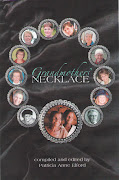
Yesterday I received a package containing a copy of Grandmothers’ Necklace where two of my poems appear: one about each of my grandmothers.
I tear the padded bag open and am unprepared for the thrill. OMG, as the kids say in text-speak; my chest fills with pride as I search for my entries. There’s one of them on the first page! Knowing You © Ruth Zaryski Jackson 2009. I exhale, read quickly through it and glance at the photo of my paternal grandmother, my Baba. Very nice, though the quality of the photo I sent was poor. Still, the first entry. Good start.
Next, I look for my other one. There it is on page 38 but whoops, my name is misspelled: Zarysky instead of Zaryski. Flash of anger. That was careless of somebody. The editor, the publisher; who to blame? Gradually I relax. I talk to myself. It’s ok, Ruth. It’s correct in the first entry. Maybe they can correct it in future print runs. Just chill.
I forget about the error and focus on the poem. Wash Day © Ruth Zaryski Jackson 2009. Looks fine, though not as prominent on the left side of the book. The old photos of my grandmother and my mother at age 6 are not bad. I read the poem and smile. Not too bad at all.
I’d arranged to meet a couple of old university friends in Toronto last night at the former Park Plaza Hotel Roof Top Lounge, so I tuck a copy of the book in my bag. When I show it to them, they’re impressed. I smile with pride. I’m a writer now and here’s proof.
By the time I roll into bed, after reading a few more pieces in the book, I yawn and expect to be out in a flash. No. The excitement is still bubbling. I enjoy the reruns of the day for several more hours.
I tear the padded bag open and am unprepared for the thrill. OMG, as the kids say in text-speak; my chest fills with pride as I search for my entries. There’s one of them on the first page! Knowing You © Ruth Zaryski Jackson 2009. I exhale, read quickly through it and glance at the photo of my paternal grandmother, my Baba. Very nice, though the quality of the photo I sent was poor. Still, the first entry. Good start.
Next, I look for my other one. There it is on page 38 but whoops, my name is misspelled: Zarysky instead of Zaryski. Flash of anger. That was careless of somebody. The editor, the publisher; who to blame? Gradually I relax. I talk to myself. It’s ok, Ruth. It’s correct in the first entry. Maybe they can correct it in future print runs. Just chill.
I forget about the error and focus on the poem. Wash Day © Ruth Zaryski Jackson 2009. Looks fine, though not as prominent on the left side of the book. The old photos of my grandmother and my mother at age 6 are not bad. I read the poem and smile. Not too bad at all.
I’d arranged to meet a couple of old university friends in Toronto last night at the former Park Plaza Hotel Roof Top Lounge, so I tuck a copy of the book in my bag. When I show it to them, they’re impressed. I smile with pride. I’m a writer now and here’s proof.
By the time I roll into bed, after reading a few more pieces in the book, I yawn and expect to be out in a flash. No. The excitement is still bubbling. I enjoy the reruns of the day for several more hours.
Read, Read, Read!
I have not been writing much during the past two or three weeks so I decided to read instead of sitting idly in front of my screen. I’m surrounded by stacks of books crying to be read.
I first picked up one I had started: Under This Unbroken Sky by Shandi Mitchell. This heartbreaker of a first novel by a Canadian film maker is based on stories she heard about her Ukrainian paternal ancestors pioneering in Alberta in the 1930s, interwoven with stories gleaned and imagined from archival photographs and written records. Using multiple points of view, she weaves the story cinematically; a technique that is sometimes confusing, but in the end packs a wallop that lasts long after the final page is turned. I sometimes loved it and sometimes hated it, and I couldn't put it down. I'm left with such a deep feeling of the tragedy of human lives, caught in a web of circumstances they can barely fathom. All they know is to keep going, whatever the direction. This book is a gift in particular, to readers of Ukrainian heritage. So many stories yet untold. Highly recommended.
The next book I read was: The Lost A Search for Six of Six Million by Daniel Mendelsohn. The author is a well-known writer and teacher, a classicist at Bard College, and the family historian. He began his quest as a child, fascinated by his grandfather’s stories and the flimsy details of his great-uncle’s family’s disappearance during World War II. His search for survivors from the small village in present day Ukraine takes him to 12 countries and 4 continents. Interwoven with his personal quest are stories from Genesis in the Hebrew Bible with timeless themes of wanderings, searching, betrayal, and violence. Sometimes repeating himself, Mendelsohn tells the tale his way, the old way his grandfather told a story and in fact, the way the Greeks told their stories. He meanders in and out of the narrative, between past and present, Biblical texts and survivor’s dialogue. After over 500 pages, the reader is left with the feeling of having read an epic. Indeed, it is an epic. Highly recommended.
I first picked up one I had started: Under This Unbroken Sky by Shandi Mitchell. This heartbreaker of a first novel by a Canadian film maker is based on stories she heard about her Ukrainian paternal ancestors pioneering in Alberta in the 1930s, interwoven with stories gleaned and imagined from archival photographs and written records. Using multiple points of view, she weaves the story cinematically; a technique that is sometimes confusing, but in the end packs a wallop that lasts long after the final page is turned. I sometimes loved it and sometimes hated it, and I couldn't put it down. I'm left with such a deep feeling of the tragedy of human lives, caught in a web of circumstances they can barely fathom. All they know is to keep going, whatever the direction. This book is a gift in particular, to readers of Ukrainian heritage. So many stories yet untold. Highly recommended.
The next book I read was: The Lost A Search for Six of Six Million by Daniel Mendelsohn. The author is a well-known writer and teacher, a classicist at Bard College, and the family historian. He began his quest as a child, fascinated by his grandfather’s stories and the flimsy details of his great-uncle’s family’s disappearance during World War II. His search for survivors from the small village in present day Ukraine takes him to 12 countries and 4 continents. Interwoven with his personal quest are stories from Genesis in the Hebrew Bible with timeless themes of wanderings, searching, betrayal, and violence. Sometimes repeating himself, Mendelsohn tells the tale his way, the old way his grandfather told a story and in fact, the way the Greeks told their stories. He meanders in and out of the narrative, between past and present, Biblical texts and survivor’s dialogue. After over 500 pages, the reader is left with the feeling of having read an epic. Indeed, it is an epic. Highly recommended.
Braiding and Backstory
Prior to taking a bash at a first draft of my memoir, I spent some time thinking about braiding and backstory as they applied to my writing.
The concept of ‘braiding’ your story line was mentioned in an article by Heather Sellers in the July/August 2009 issue of Writer’s Digest. I kept wondering what my story lines were besides little stories I had written of my childhood. Did I have separate story lines? When I started writing my memoir stories, I remember I was confused about whether I was writing one or three books: my story, my mother’s story and my father’s story. Since I was into genealogy and busy trying to trace my family history and compile a family tree, I had a lot of information and didn’t know how I was going to use it. Braiding helped me to think about these three strands as braids, a weaving of the three stories. I just needed to identify the scenes in each strand of the braid that best told my story in a way that came across to the reader as fresh and engaging.
Backstory is another writing concept that spoke to me as I struggled with my braids. I realized that my parents’ stories were my backstory and if I wanted to tell all three I could only do this very selectively using parts but not all of my parents’ stories. All the genealogy and background could go in a family history but not in my memoir. I needed to include only what is needed in a particular scene to reveal important information about the main character(s) and their history. My parents’ history is my backstory, my grandparents’ history is my parents’ backstory and so on. This seems so obvious now that I’ve sorted it out. Thinking these concepts through has led me to another one: plot. And how do you use plot in memoir writing?
The concept of ‘braiding’ your story line was mentioned in an article by Heather Sellers in the July/August 2009 issue of Writer’s Digest. I kept wondering what my story lines were besides little stories I had written of my childhood. Did I have separate story lines? When I started writing my memoir stories, I remember I was confused about whether I was writing one or three books: my story, my mother’s story and my father’s story. Since I was into genealogy and busy trying to trace my family history and compile a family tree, I had a lot of information and didn’t know how I was going to use it. Braiding helped me to think about these three strands as braids, a weaving of the three stories. I just needed to identify the scenes in each strand of the braid that best told my story in a way that came across to the reader as fresh and engaging.
Backstory is another writing concept that spoke to me as I struggled with my braids. I realized that my parents’ stories were my backstory and if I wanted to tell all three I could only do this very selectively using parts but not all of my parents’ stories. All the genealogy and background could go in a family history but not in my memoir. I needed to include only what is needed in a particular scene to reveal important information about the main character(s) and their history. My parents’ history is my backstory, my grandparents’ history is my parents’ backstory and so on. This seems so obvious now that I’ve sorted it out. Thinking these concepts through has led me to another one: plot. And how do you use plot in memoir writing?
Subscribe to:
Posts (Atom)


 Posts
Posts