This week I’ve been thinking about my character flaw: what it is about me that changes and evolves throughout the story I am telling in my memoir. Maybe ‘character flaw’ is the wrong term. It sounds negative and is not something I can easily identify in myself. Maybe it’s better to think of it as the thread that consistently runs through my life. The thing that may have got me into trouble or stopped me from achieving my goals.
I find I’m in murky territory here. It’s difficult to go back to those times in my life and examine myself honestly. Maybe I have grown a thick skin or buried some of the stories that reveal sides of myself I wasn’t proud of. Was it when I got into situations with bad friends? Was it when I made decisions in school to avoid what I wasn’t good at?
When I think about this, I find I have rationalized some of my failings. To myself I have said: Well, if only you’d had more support, you wouldn’t have got yourself in to this situation. If your mother had done X, then you would have not done Y.
I have also done a lot of thinking and intellectualizing over the years about certain issues in my life. Was I ambivalent about success? Were my feminist values at war with my traditional values? Was I looking for a father figure? That’s not the same thing as connecting emotionally with the issues.
I’ve concluded that I need to do some free writing about these topics and see what comes up on a feeling level and what memories surface. I’m not trying to write a healing memoir but maybe by examining parts of ourselves that we’ve buried, we can get to a more authentic voice in writing memoir. I’m committed to moving forward or is it ‘fearward’?


Plot in Memoir

When I first heard Martha Alderson in an NAMW Teleseminar talking about plot in memoir writing, I was confused. How could a memoir have a plot? Wasn’t that for mystery or romance fiction? I checked her website and blog and forgot about it until recently, when I was trying to figure out how to structure my memoir.
What was unique about my story, in our family at least, was that we lived in a rooming house for the first 9 years of my life. I was the first born and the roomers were my extended family until we moved to the suburbs. A huge area of downtown – 20 square blocks - was my backyard. At first I wondered if I should just concentrate on the Charles Street stories and try to publish that part on its own.
Then I went back and had another look at the concept of plot. If I only did the Charles Street stories, there wasn’t much plot. “Girl grows up: first 9 years in downtown rooming house.” I examined all the readings and plotting tools Martha has on her blog especially The Plot Planner and the Scene Planner. I read all her tips about plot and memoir. I thought long and hard about the boundaries of my story and how much of my life story I wanted to tell.
The Plot Planner helped me to define the time frame and helped me realize that the Charles Street Stories were only The Beginning of my story. Moving to the suburbs was only the end of The Beginning ¼ of my book. The Crisis came later, in The Middle, and the Climax and Resolution, in The End.
I had to keep my eye on this ball and make sure the stories I include follow the plot of my character development and growth to adulthood. Otherwise, my story will just be a rambling mess of little stories that will fail to engage the reader, even my own children.
What was unique about my story, in our family at least, was that we lived in a rooming house for the first 9 years of my life. I was the first born and the roomers were my extended family until we moved to the suburbs. A huge area of downtown – 20 square blocks - was my backyard. At first I wondered if I should just concentrate on the Charles Street stories and try to publish that part on its own.
Then I went back and had another look at the concept of plot. If I only did the Charles Street stories, there wasn’t much plot. “Girl grows up: first 9 years in downtown rooming house.” I examined all the readings and plotting tools Martha has on her blog especially The Plot Planner and the Scene Planner. I read all her tips about plot and memoir. I thought long and hard about the boundaries of my story and how much of my life story I wanted to tell.
The Plot Planner helped me to define the time frame and helped me realize that the Charles Street Stories were only The Beginning of my story. Moving to the suburbs was only the end of The Beginning ¼ of my book. The Crisis came later, in The Middle, and the Climax and Resolution, in The End.
I had to keep my eye on this ball and make sure the stories I include follow the plot of my character development and growth to adulthood. Otherwise, my story will just be a rambling mess of little stories that will fail to engage the reader, even my own children.
Photo: My house on Charles Street, 2009
Braiding and Backstory
Prior to taking a bash at a first draft of my memoir, I spent some time thinking about braiding and backstory as they applied to my writing.
The concept of ‘braiding’ your story line was mentioned in an article by Heather Sellers in the July/August 2009 issue of Writer’s Digest. I kept wondering what my story lines were besides little stories I had written of my childhood. Did I have separate story lines? When I started writing my memoir stories, I remember I was confused about whether I was writing one or three books: my story, my mother’s story and my father’s story. Since I was into genealogy and busy trying to trace my family history and compile a family tree, I had a lot of information and didn’t know how I was going to use it. Braiding helped me to think about these three strands as braids, a weaving of the three stories. I just needed to identify the scenes in each strand of the braid that best told my story in a way that came across to the reader as fresh and engaging.
Backstory is another writing concept that spoke to me as I struggled with my braids. I realized that my parents’ stories were my backstory and if I wanted to tell all three I could only do this very selectively using parts but not all of my parents’ stories. All the genealogy and background could go in a family history but not in my memoir. I needed to include only what is needed in a particular scene to reveal important information about the main character(s) and their history. My parents’ history is my backstory, my grandparents’ history is my parents’ backstory and so on. This seems so obvious now that I’ve sorted it out. Thinking these concepts through has led me to another one: plot. And how do you use plot in memoir writing?
The concept of ‘braiding’ your story line was mentioned in an article by Heather Sellers in the July/August 2009 issue of Writer’s Digest. I kept wondering what my story lines were besides little stories I had written of my childhood. Did I have separate story lines? When I started writing my memoir stories, I remember I was confused about whether I was writing one or three books: my story, my mother’s story and my father’s story. Since I was into genealogy and busy trying to trace my family history and compile a family tree, I had a lot of information and didn’t know how I was going to use it. Braiding helped me to think about these three strands as braids, a weaving of the three stories. I just needed to identify the scenes in each strand of the braid that best told my story in a way that came across to the reader as fresh and engaging.
Backstory is another writing concept that spoke to me as I struggled with my braids. I realized that my parents’ stories were my backstory and if I wanted to tell all three I could only do this very selectively using parts but not all of my parents’ stories. All the genealogy and background could go in a family history but not in my memoir. I needed to include only what is needed in a particular scene to reveal important information about the main character(s) and their history. My parents’ history is my backstory, my grandparents’ history is my parents’ backstory and so on. This seems so obvious now that I’ve sorted it out. Thinking these concepts through has led me to another one: plot. And how do you use plot in memoir writing?
"Butt in the Chair"
Today I begin my fourth consecutive day of putting my “butt in the chair” to draft my memoir. After 3 years of writing stories, taking courses, worrying about other people reading my work, I have finally decided to settle down and write a garbage draft of my book, warts and all.
After so much procrastinating, I have shifted to a new resolve: just get it out. As Martha Alderson says: “Can’t finesse that which isn’t written”. Besides the first draft is only a first draft. The job is by no means over; in fact it may be just beginning.
The hardest part for me about getting down to it is blocking out distractions in my life and making my book the number one priority. It required giving my husband a clear heads-up: “I will be writing my book in August”. I had to clear my schedule of any frivolous activities: the chiropractor is ok but no unnecessary shopping. Meeting with my writing group is ok but not socializing with my friends unless it’s “after work hours” or on the weekend. Helping out my kids during a crisis is ok but lengthly chatting and hanging out is not.
Getting into a daily routine was another challenge. I like to arise slowly and putter around before getting down to work. I like to sleep in and work at night. For this month I am trying to follow a plan to get up early, work in the mornings until around 1 pm then read or do something mindless like gardening in the afternoon when I can let my mind drift and let things percolate.
So far I have written and sorted out stories in the beginning ¼ of my book. Sixty pages double spaced, about 12,000 words. Not bad for a start.
After so much procrastinating, I have shifted to a new resolve: just get it out. As Martha Alderson says: “Can’t finesse that which isn’t written”. Besides the first draft is only a first draft. The job is by no means over; in fact it may be just beginning.
The hardest part for me about getting down to it is blocking out distractions in my life and making my book the number one priority. It required giving my husband a clear heads-up: “I will be writing my book in August”. I had to clear my schedule of any frivolous activities: the chiropractor is ok but no unnecessary shopping. Meeting with my writing group is ok but not socializing with my friends unless it’s “after work hours” or on the weekend. Helping out my kids during a crisis is ok but lengthly chatting and hanging out is not.
Getting into a daily routine was another challenge. I like to arise slowly and putter around before getting down to work. I like to sleep in and work at night. For this month I am trying to follow a plan to get up early, work in the mornings until around 1 pm then read or do something mindless like gardening in the afternoon when I can let my mind drift and let things percolate.
So far I have written and sorted out stories in the beginning ¼ of my book. Sixty pages double spaced, about 12,000 words. Not bad for a start.
Reading Not Writing

In September 2008 I was thrilled to have a short story published by Hidden Brook Press in a small anthology about Grandmothers, called Wisdom of Old Souls.
The first launch was September 29, 2008 in Chapters in Kingston and about 15 authors were present along with some family members and partners. One even came from Chicago. Some authors attended but did not read. Evidently they only write.
I was asked to read last – alphabetical and also because my old photograph was on the cover and I got to mention that in my preamble. The story was very short only 300 words so, when I was asked to read, I was able to read the entire story with time to spare in the 5 minute slot. Nervously, I waited, listening to all the others read their stories. By the time my turn came, I felt quite composed and easily told a bit of the background and read my story. In the audience were mainly writers, the publisher and friends but a few Chapters’ customers wandered by and listened. I received a lot of feedback from other writers about the photo in particular and how much they enjoyed my story.
This book launch was followed by another one a few weeks later at the Stellar Literary Festival in Oshawa. Held under a tent in a park on a drizzly Saturday, this reading attracted only a handful of diehards, friends and writers. Still, it was a good experience to stand up in front of an audience again and tell my story.
A few weeks later WCDR along with the publisher of Hidden Brook Press held another launch at the Whitby Library. The room was packed with about 100 people: writers, family, friends, WCDR members and library patrons but only 8 – 10 readers. Again I was excited but not nervous as I read my story again unaware that my writing teacher Allyson and friend Cheryl had crept into the back row. The audience was particularly warm and receptive. You could have heard the proverbial pin drop as we read. Several aspiring writers came up to me and asked me how I had achieved publication of a story! I replied: “I just sent it in.” There is an apparent gap between those that write and those that get published. I believe the difference is only in having enough confidence to send it in.
The first launch was September 29, 2008 in Chapters in Kingston and about 15 authors were present along with some family members and partners. One even came from Chicago. Some authors attended but did not read. Evidently they only write.
I was asked to read last – alphabetical and also because my old photograph was on the cover and I got to mention that in my preamble. The story was very short only 300 words so, when I was asked to read, I was able to read the entire story with time to spare in the 5 minute slot. Nervously, I waited, listening to all the others read their stories. By the time my turn came, I felt quite composed and easily told a bit of the background and read my story. In the audience were mainly writers, the publisher and friends but a few Chapters’ customers wandered by and listened. I received a lot of feedback from other writers about the photo in particular and how much they enjoyed my story.
This book launch was followed by another one a few weeks later at the Stellar Literary Festival in Oshawa. Held under a tent in a park on a drizzly Saturday, this reading attracted only a handful of diehards, friends and writers. Still, it was a good experience to stand up in front of an audience again and tell my story.
A few weeks later WCDR along with the publisher of Hidden Brook Press held another launch at the Whitby Library. The room was packed with about 100 people: writers, family, friends, WCDR members and library patrons but only 8 – 10 readers. Again I was excited but not nervous as I read my story again unaware that my writing teacher Allyson and friend Cheryl had crept into the back row. The audience was particularly warm and receptive. You could have heard the proverbial pin drop as we read. Several aspiring writers came up to me and asked me how I had achieved publication of a story! I replied: “I just sent it in.” There is an apparent gap between those that write and those that get published. I believe the difference is only in having enough confidence to send it in.
Poetry as Memoir
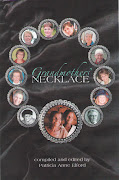
A few months ago I received an invitation from Patricia Elford to submit a piece to an anthology called Grandmothers’ Necklace. As it was to be published as a fundraiser for the Grandmothers to Grandmothers Project of the Stephen Lewis’ Foundation, I was highly motivated to send something. My problem was: what to send? I could write about my experiences as a new grandmother but those feelings seemed too recent to write about. I had already written and published a short story in Wisdom of Old Souls about a woman who was like a grandmother to me. I never knew my paternal grandmother as she never emigrated from Ukraine and died when I was 6. My maternal grandmother or Baba had immigrated to Manitoba from Ukraine in 1911. We visited her once when I was about 18 months but I have no memory of her, and she died a few months later when I was two. How could I write about them?
I had interviewed my mother extensively trying to piece together my family history, so I had stories she had told me about her childhood and her parents. I decided to write a short poem based on a story she had told me about doing laundry on the farm under primitive conditions. The story tied into many feelings both she and her mother had about their lives. I called it Wash Day. After finishing one poem and feeling successful, I thought about my paternal grandmother and remembered an audiotape my sister had done with my father talking about his life. I listened to it again, especially the part where he talks about his mother then wrote a second poem about her called Knowing You. It too felt right so I sent both poems to Patricia, along with photos of my grandmothers and crossed my fingers.
On the 7th of July, almost 2 months later I was delighted to receive an email that both poems had been accepted.
What I learned from this experience was that memories, the basis of memoirs, can be expressed in many forms. Poetry is a great vehicle for short focused thoughts about a person, place or thing you remember from your past or, as in this case, a memory of someone based on stories you’ve heard. It’s all part of your past and all fuel for your memoir. Michael Ondaatje also knew this when he wrote his family memoir Running in the Family.
I had interviewed my mother extensively trying to piece together my family history, so I had stories she had told me about her childhood and her parents. I decided to write a short poem based on a story she had told me about doing laundry on the farm under primitive conditions. The story tied into many feelings both she and her mother had about their lives. I called it Wash Day. After finishing one poem and feeling successful, I thought about my paternal grandmother and remembered an audiotape my sister had done with my father talking about his life. I listened to it again, especially the part where he talks about his mother then wrote a second poem about her called Knowing You. It too felt right so I sent both poems to Patricia, along with photos of my grandmothers and crossed my fingers.
On the 7th of July, almost 2 months later I was delighted to receive an email that both poems had been accepted.
What I learned from this experience was that memories, the basis of memoirs, can be expressed in many forms. Poetry is a great vehicle for short focused thoughts about a person, place or thing you remember from your past or, as in this case, a memory of someone based on stories you’ve heard. It’s all part of your past and all fuel for your memoir. Michael Ondaatje also knew this when he wrote his family memoir Running in the Family.
About My Writers Group: Life Writers Ink by Cheryl Andrews with help from the Others

Our group of five women first came together as participants in Allyson Latta’s online memoir writing courses. (see: http://daysroadwriters.blogspot.com/) Compelled by the support, encouragement and professional critiquing we learned through those courses, we didn’t want to let go. The Memoir Writer’s Social Allyson organized in September 2008 gave us the opportunity to meet face-to-face for the first time.
When Allyson posted an article on http://www.wordsalive.ca/, “Start Your Own Writers Group”, I was inspired and forwarded it on to Anahita Printer Nepton, Gail Rudyk, Mary McIntyre and Ruth Zaryski Jackson.
“I know that workshops … can provide inspiration while they’re going on, but that that inspiration can disappear in a poof once they walk out the door (real or virtual). A writers group is the logical next step ...” (Allyson Latta 9/30/2008)
It certainly was the logical next step for us, and the article became the basis for our group Guidelines. We took them to a fairly comprehensive, yet informal and relaxed level and haven’t referred to them since. The extensive discussion process we undertook about the structure of our writing group was the critical element.
We came up with a name, “Life Writers Ink”. Mary (lovingly) refers to us as the Lifers.
We held our inaugural meeting January 25th, 2009. We prefer Sunday afternoons, once a month and take turns hosting. As Allyson Alumni we have slipped into the writing group format with very few wrinkles!
“Every meeting reinforces my respect for our writing differences and how we learn from each other… I gain so much from your ideas. You energize me again to do more heavy lifting with my pen.” (Mary McIntyre)
During our meetings we read our pieces to each other, critiquing upon request, socialize, discuss and swap books we’ve read recently, share news about upcoming literary events and contests, cheer and applaud successes and pry open the door when one of us hits the creative wall.
“I personally enjoy the side discussions that come up about the latest books we have read and information about any calls for submissions. (Gail Rudyk)
Life Writers Ink is about discovering the courage to explore the furthest reaches of our creative sides and providing encouragement as we move toward publishing. Writing memoir brought us together, and the support we get from the group has provided the incentive to investigate other genres. I’m playing with fiction, Ruth has ventured into the realm of poetry and Gail, humorous vignettes about life and living. Anahita is sharing poignant passages from the journal she kept while watching over her dying father. Mary has found the energy to take on a major memoir project about where she really grew up … the family cottage.
“ … (our) varied styles … keep our creative energies up, fueling new ideas/stories … suggestions are fodder that provides … options and directions that we may not have thought about, whether we use them or not. The variety of styles … helps to keep the blinders off so we are free to grow, develop and express ourselves beyond our abilities.”
(Anahita Printer Nepton)
Email helps us extend the encouraging borders of Life Writers ink. Between meetings fresh pieces get circulated and critiqued, ideas tossed out for input, and progress, roadblocks and angst shared. No one is allowed to go silent for too long.
There’s something extraordinary about the camaraderie of our group. The comfort level with being honest and open as well as supportive and critical is way beyond where a newly formed group might be.
“I … feel supported by the group to move forward and overcome my lethargy… our writing differences stir our creativity and make us better writers. Thanks for your encouragement with the submissions.” (Ruth Zaryski Jackson)
We take courses and participate in workshops. We created this writing group and read voraciously, but ultimately we each have to spend the time writing, the best we can, alone in a room, or “… ass in chair” as Margaret Atwood says.
We laugh a lot. We work hard. We are having great fun, and we are all writing!
When Allyson posted an article on http://www.wordsalive.ca/, “Start Your Own Writers Group”, I was inspired and forwarded it on to Anahita Printer Nepton, Gail Rudyk, Mary McIntyre and Ruth Zaryski Jackson.
“I know that workshops … can provide inspiration while they’re going on, but that that inspiration can disappear in a poof once they walk out the door (real or virtual). A writers group is the logical next step ...” (Allyson Latta 9/30/2008)
It certainly was the logical next step for us, and the article became the basis for our group Guidelines. We took them to a fairly comprehensive, yet informal and relaxed level and haven’t referred to them since. The extensive discussion process we undertook about the structure of our writing group was the critical element.
We came up with a name, “Life Writers Ink”. Mary (lovingly) refers to us as the Lifers.
We held our inaugural meeting January 25th, 2009. We prefer Sunday afternoons, once a month and take turns hosting. As Allyson Alumni we have slipped into the writing group format with very few wrinkles!
“Every meeting reinforces my respect for our writing differences and how we learn from each other… I gain so much from your ideas. You energize me again to do more heavy lifting with my pen.” (Mary McIntyre)
During our meetings we read our pieces to each other, critiquing upon request, socialize, discuss and swap books we’ve read recently, share news about upcoming literary events and contests, cheer and applaud successes and pry open the door when one of us hits the creative wall.
“I personally enjoy the side discussions that come up about the latest books we have read and information about any calls for submissions. (Gail Rudyk)
Life Writers Ink is about discovering the courage to explore the furthest reaches of our creative sides and providing encouragement as we move toward publishing. Writing memoir brought us together, and the support we get from the group has provided the incentive to investigate other genres. I’m playing with fiction, Ruth has ventured into the realm of poetry and Gail, humorous vignettes about life and living. Anahita is sharing poignant passages from the journal she kept while watching over her dying father. Mary has found the energy to take on a major memoir project about where she really grew up … the family cottage.
“ … (our) varied styles … keep our creative energies up, fueling new ideas/stories … suggestions are fodder that provides … options and directions that we may not have thought about, whether we use them or not. The variety of styles … helps to keep the blinders off so we are free to grow, develop and express ourselves beyond our abilities.”
(Anahita Printer Nepton)
Email helps us extend the encouraging borders of Life Writers ink. Between meetings fresh pieces get circulated and critiqued, ideas tossed out for input, and progress, roadblocks and angst shared. No one is allowed to go silent for too long.
There’s something extraordinary about the camaraderie of our group. The comfort level with being honest and open as well as supportive and critical is way beyond where a newly formed group might be.
“I … feel supported by the group to move forward and overcome my lethargy… our writing differences stir our creativity and make us better writers. Thanks for your encouragement with the submissions.” (Ruth Zaryski Jackson)
We take courses and participate in workshops. We created this writing group and read voraciously, but ultimately we each have to spend the time writing, the best we can, alone in a room, or “… ass in chair” as Margaret Atwood says.
We laugh a lot. We work hard. We are having great fun, and we are all writing!
Subscribe to:
Posts (Atom)


 Posts
Posts