In this age of short attention spans and shameless self-promotion, writers have to be prepared to sell themselves in short sound bites whenever someone asks: So, what are you writing?
Memoirs Ink invite writers on their blog to try compression with a Fragmoir contest; Fragmoir is defined as a short (as in a 144 character Tweet) description of your life. An example: I swore I'd not kill myself if she stayed. She told me not killing myself was, frankly, not helpful. It’s kind of a cross between a status update and a summary of your life. Mine submitted for today would be: Aspiring writer spends all her time on social media to sell the book she hasn’t yet written.
I only heard the word 'logline' for the first time 2 days ago listening to Tish Cohen at the Richmond Hill library. A logline is a concise 1 or 2 sentence description of a film, screenplay or book which must include:
• Who is the main protagonist, described with a well-chosen adjective?
• What is their goal?
• What stands in their way – the antagonist?
• And sometimes a brief set up of the story
It’s the blurb you read in a movie guide that helps you decide which film to watch, e.g. A young man and woman from different social classes fall in love aboard an ill-fated voyage at sea. (Titanic) It's the grabber, the powerful hook to draw the reader, agent, publisher, or producer to your story. I wonder what my logline would be?
Smith Magazine started a contest a few years ago based on the concept of a Six-Word Memoir, life stories distilled into 6 words. The idea took off like a wildfire and they have now published several books since the first, NOT QUITE WHAT I WAS PLANNING. The idea came from Hemingway: For sale: baby shoes, never worn. That line makes me shudder every time I read it. What a story we could all write. The challenge is to condense our own story into 6 well-chosen words that have as much depth. Can I do it? Can you?
The last compression challenge is the 'elevator speech', coined in the pre-digital era. A writer might meet someone in an elevator and have just enough time before the doors opened to utter 1 short sentence in reply to: What’s your book about? How do you squish 80,000+ words into 1 line? Find the key words. Focus on the protagonist. Ignore side plots. Make it under 25 words. I’m working on mine. Are you?


Post Direct
Blogger has a new way to post directly to your blog from your iGoogle page. I'm trying it out. Sounds like an easy way to blog more frequently without cutting and pasting. We'll see.
Just tried to post direct and as I was finishing, lost the whole thing! Arrrrgggg!
Just tried to post direct and as I was finishing, lost the whole thing! Arrrrgggg!
Getting Published
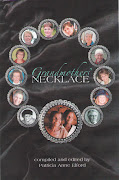
Yesterday I received a package containing a copy of Grandmothers’ Necklace where two of my poems appear: one about each of my grandmothers.
I tear the padded bag open and am unprepared for the thrill. OMG, as the kids say in text-speak; my chest fills with pride as I search for my entries. There’s one of them on the first page! Knowing You © Ruth Zaryski Jackson 2009. I exhale, read quickly through it and glance at the photo of my paternal grandmother, my Baba. Very nice, though the quality of the photo I sent was poor. Still, the first entry. Good start.
Next, I look for my other one. There it is on page 38 but whoops, my name is misspelled: Zarysky instead of Zaryski. Flash of anger. That was careless of somebody. The editor, the publisher; who to blame? Gradually I relax. I talk to myself. It’s ok, Ruth. It’s correct in the first entry. Maybe they can correct it in future print runs. Just chill.
I forget about the error and focus on the poem. Wash Day © Ruth Zaryski Jackson 2009. Looks fine, though not as prominent on the left side of the book. The old photos of my grandmother and my mother at age 6 are not bad. I read the poem and smile. Not too bad at all.
I’d arranged to meet a couple of old university friends in Toronto last night at the former Park Plaza Hotel Roof Top Lounge, so I tuck a copy of the book in my bag. When I show it to them, they’re impressed. I smile with pride. I’m a writer now and here’s proof.
By the time I roll into bed, after reading a few more pieces in the book, I yawn and expect to be out in a flash. No. The excitement is still bubbling. I enjoy the reruns of the day for several more hours.
I tear the padded bag open and am unprepared for the thrill. OMG, as the kids say in text-speak; my chest fills with pride as I search for my entries. There’s one of them on the first page! Knowing You © Ruth Zaryski Jackson 2009. I exhale, read quickly through it and glance at the photo of my paternal grandmother, my Baba. Very nice, though the quality of the photo I sent was poor. Still, the first entry. Good start.
Next, I look for my other one. There it is on page 38 but whoops, my name is misspelled: Zarysky instead of Zaryski. Flash of anger. That was careless of somebody. The editor, the publisher; who to blame? Gradually I relax. I talk to myself. It’s ok, Ruth. It’s correct in the first entry. Maybe they can correct it in future print runs. Just chill.
I forget about the error and focus on the poem. Wash Day © Ruth Zaryski Jackson 2009. Looks fine, though not as prominent on the left side of the book. The old photos of my grandmother and my mother at age 6 are not bad. I read the poem and smile. Not too bad at all.
I’d arranged to meet a couple of old university friends in Toronto last night at the former Park Plaza Hotel Roof Top Lounge, so I tuck a copy of the book in my bag. When I show it to them, they’re impressed. I smile with pride. I’m a writer now and here’s proof.
By the time I roll into bed, after reading a few more pieces in the book, I yawn and expect to be out in a flash. No. The excitement is still bubbling. I enjoy the reruns of the day for several more hours.
Valentine's Memories

We did exchange valentines at school. Secret valentines to our crushes and others to our friends. How many did you get? Were you as popular as me? Did you have any secret admirers? It was all about friendship and love and popularity. I didn’t mind the first two, but I hated competing with others for votes. It cheapened the sincerity of friendship for me.
In high school there were Valentine’s Day dances or sock hops. Were they the same as Sadie Hawkins Dances where the girls could ask the boys out? That was a big deal in the 1950s. You were supposed to wait for the boys to ask you. They had the responsibility of walking up to you in hall at school or phoning you to ask for a date. Girls were supposed to be passive and wait for a call. But that social rule was reversed for Sadie Hawkins, and girls could ask the boys. The pressure was excruciating; I may have screwed up my courage a few times to ask someone. Being rejected didn’t make it any easier, even if it made us more empathic.
In 1976 I got married on Valentine’s Day, so now the day is associated with the day my husband and I took our vows. It was a beautiful wedding at our home with all our friends and family. The room was filled with daffodils, love and laughter. When I look back, I remember my naïve hope that it would last; and it has. Not without bumps, sometimes big ones. The memories make Valentines’ Day a very special one for me.
Memoir or Fiction?
On Sunday I attended an inspiring Books and Brunch session sponsored by a local independent book store, Blue Heron Books. Featured speakers were Kim Echlin and Marina Nemat. Despite the fact I hadn’t read either of their most recent books, The Disappeared and Prisoner of Tehran, both speakers moved me deeply and got me thinking.
Kim Echlin’s novel is a love story, a story of loss and longing set amidst the Cambodian genocide of the Pol Pot regime. Admired by the judges for her sensual details and spare prose, it t was shortlisted for the Giller prize in 2009. She spoke to the group of choosing to bear witness to the Cambodian horrors and family impacts of the killings by making it the backdrop for her fictional characters. A choice to write fiction.
Marina Nemat’s shocking memoir is a true tale of her imprisonment at the age of 16 by the Khomeini regime in Iran. She was tortured, beaten, forced to marry her torturer. She suffered beyond belief, yet survived to tell the story. I was almost in tears as she spoke. But, I wondered, when she had to steel herself psychologically in order to survive, how much of the detail can she honestly remember? I know she writes a disclaimer that she’s done her best. The rules for memoir now include using dialogue and other techniques of fiction writing. I was so moved by her story and determination to speak out against oppression wherever it occurs. Still I wondered about choosing to write a memoir. Did she ever consider writing it as fiction?
As I think about my own story, I wonder about the difference between fiction and memoir, and how do you choose the best form for your story? Do you write a healing memoir as Marina has done, remembering as best you can after a traumatic experience and adding dialogue to make the story interesting? Or do you write your story as fiction, still telling the story you intended to tell, but without the constraints of a memoir format?
Kim Echlin’s novel is a love story, a story of loss and longing set amidst the Cambodian genocide of the Pol Pot regime. Admired by the judges for her sensual details and spare prose, it t was shortlisted for the Giller prize in 2009. She spoke to the group of choosing to bear witness to the Cambodian horrors and family impacts of the killings by making it the backdrop for her fictional characters. A choice to write fiction.
Marina Nemat’s shocking memoir is a true tale of her imprisonment at the age of 16 by the Khomeini regime in Iran. She was tortured, beaten, forced to marry her torturer. She suffered beyond belief, yet survived to tell the story. I was almost in tears as she spoke. But, I wondered, when she had to steel herself psychologically in order to survive, how much of the detail can she honestly remember? I know she writes a disclaimer that she’s done her best. The rules for memoir now include using dialogue and other techniques of fiction writing. I was so moved by her story and determination to speak out against oppression wherever it occurs. Still I wondered about choosing to write a memoir. Did she ever consider writing it as fiction?
As I think about my own story, I wonder about the difference between fiction and memoir, and how do you choose the best form for your story? Do you write a healing memoir as Marina has done, remembering as best you can after a traumatic experience and adding dialogue to make the story interesting? Or do you write your story as fiction, still telling the story you intended to tell, but without the constraints of a memoir format?
Read, Read, Read!
I have not been writing much during the past two or three weeks so I decided to read instead of sitting idly in front of my screen. I’m surrounded by stacks of books crying to be read.
I first picked up one I had started: Under This Unbroken Sky by Shandi Mitchell. This heartbreaker of a first novel by a Canadian film maker is based on stories she heard about her Ukrainian paternal ancestors pioneering in Alberta in the 1930s, interwoven with stories gleaned and imagined from archival photographs and written records. Using multiple points of view, she weaves the story cinematically; a technique that is sometimes confusing, but in the end packs a wallop that lasts long after the final page is turned. I sometimes loved it and sometimes hated it, and I couldn't put it down. I'm left with such a deep feeling of the tragedy of human lives, caught in a web of circumstances they can barely fathom. All they know is to keep going, whatever the direction. This book is a gift in particular, to readers of Ukrainian heritage. So many stories yet untold. Highly recommended.
The next book I read was: The Lost A Search for Six of Six Million by Daniel Mendelsohn. The author is a well-known writer and teacher, a classicist at Bard College, and the family historian. He began his quest as a child, fascinated by his grandfather’s stories and the flimsy details of his great-uncle’s family’s disappearance during World War II. His search for survivors from the small village in present day Ukraine takes him to 12 countries and 4 continents. Interwoven with his personal quest are stories from Genesis in the Hebrew Bible with timeless themes of wanderings, searching, betrayal, and violence. Sometimes repeating himself, Mendelsohn tells the tale his way, the old way his grandfather told a story and in fact, the way the Greeks told their stories. He meanders in and out of the narrative, between past and present, Biblical texts and survivor’s dialogue. After over 500 pages, the reader is left with the feeling of having read an epic. Indeed, it is an epic. Highly recommended.
I first picked up one I had started: Under This Unbroken Sky by Shandi Mitchell. This heartbreaker of a first novel by a Canadian film maker is based on stories she heard about her Ukrainian paternal ancestors pioneering in Alberta in the 1930s, interwoven with stories gleaned and imagined from archival photographs and written records. Using multiple points of view, she weaves the story cinematically; a technique that is sometimes confusing, but in the end packs a wallop that lasts long after the final page is turned. I sometimes loved it and sometimes hated it, and I couldn't put it down. I'm left with such a deep feeling of the tragedy of human lives, caught in a web of circumstances they can barely fathom. All they know is to keep going, whatever the direction. This book is a gift in particular, to readers of Ukrainian heritage. So many stories yet untold. Highly recommended.
The next book I read was: The Lost A Search for Six of Six Million by Daniel Mendelsohn. The author is a well-known writer and teacher, a classicist at Bard College, and the family historian. He began his quest as a child, fascinated by his grandfather’s stories and the flimsy details of his great-uncle’s family’s disappearance during World War II. His search for survivors from the small village in present day Ukraine takes him to 12 countries and 4 continents. Interwoven with his personal quest are stories from Genesis in the Hebrew Bible with timeless themes of wanderings, searching, betrayal, and violence. Sometimes repeating himself, Mendelsohn tells the tale his way, the old way his grandfather told a story and in fact, the way the Greeks told their stories. He meanders in and out of the narrative, between past and present, Biblical texts and survivor’s dialogue. After over 500 pages, the reader is left with the feeling of having read an epic. Indeed, it is an epic. Highly recommended.
Doubts Creep In
My memoir writing has stalled this week in spite of my January 1st resolutions. When I look back at myself in high school, I see one turning point that I can perhaps finesse into a story. Other events occurred outside of school and are not in the yearbooks; jobs I held, family events, social interactions all influenced me. School life dominated during those years and I only have one story. Maybe this exercise was a waste of time? I seem to have doubts now in spite of my determination to continue writing.
Last Saturday I attended a master class workshop at the Richmond Hill library with Barry Dempster. That’s when the questioning crept in. We were asked to bring 1 page from our current project. I brought my opening page (rough 1st draft) from my memoir to a group of strangers. We broke into small groups, read and gave feedback to each other. Parts that I thought were clear were questioned. Parts that had even been published were questioned. Gone was the gentle nurturing of my Writers Group, with negatives cradled in positives. This was the reaction of the anonymous ‘reader’ who just picks up your book and flips through, reading the first page in order to decide whether to buy it. I’m still feeling wounded from that experience. I knew what I meant. It just didn’t come across clearly to them. I thought I was ‘showing’, they thought I was ‘telling’. I know in my head that good writing is 90% rewriting, but negative feedback hurts, the way criticism of our children hurts. We take it personally.
I know what I have to do. Take their comments into account. Revise. But only after I finish my first draft. So, butt back in the chair. Return to my agenda for my book. Put the comments into perspective. There were some positives though I forget what they were right now. Just get on with it, Ruth!
Last Saturday I attended a master class workshop at the Richmond Hill library with Barry Dempster. That’s when the questioning crept in. We were asked to bring 1 page from our current project. I brought my opening page (rough 1st draft) from my memoir to a group of strangers. We broke into small groups, read and gave feedback to each other. Parts that I thought were clear were questioned. Parts that had even been published were questioned. Gone was the gentle nurturing of my Writers Group, with negatives cradled in positives. This was the reaction of the anonymous ‘reader’ who just picks up your book and flips through, reading the first page in order to decide whether to buy it. I’m still feeling wounded from that experience. I knew what I meant. It just didn’t come across clearly to them. I thought I was ‘showing’, they thought I was ‘telling’. I know in my head that good writing is 90% rewriting, but negative feedback hurts, the way criticism of our children hurts. We take it personally.
I know what I have to do. Take their comments into account. Revise. But only after I finish my first draft. So, butt back in the chair. Return to my agenda for my book. Put the comments into perspective. There were some positives though I forget what they were right now. Just get on with it, Ruth!
Subscribe to:
Posts (Atom)


 Posts
Posts