Publication in Nasha Doroha Anthology 2012

I am excited to announce publication of two pieces of my writing in the 2012 Nasha Doroha Anthology, a special edition of the quarterly journal of the Ukrainian Catholic Women's League of Canada.


As a tribute to 1,300,000 Ukrainian immigrants to Canada during the past 120 years, the editor, Oksana Bashuk Hepburn, has assembled a collection of over 50 stories and poems, both in English and Ukrainian, in a double edition of their journal under the headings: Departing, Settling, Remembering, Contributing, Returning and Going Forward.

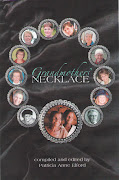
The story about my father appeared on this blog in an earlier version by the same title, 'Thoughts on my Father' and the poem 'Knowing You', about my paternal Baba, was previously published in "Grandmothers' Necklace" in 2010.

Copies of Nasha Doroha Anthology may be obtained for $10.00 each from:

Elizabeth Zahayko
387 Betts Ave.,
Yorkton, SK
S3N 1N3
(306) 783-6282
eazahayko@sasktel.net

Copyright © 2012, Ruth Zaryski Jackson

‘Immersion Memoir’ and Returning to My Childhood Home Part 1

As I was reading a recent essay by Suzanne Farrell Smith called “The Inner Identity of Immersion Memoir”, I began thinking about my own trip back to my childhood home on Charles Street in Toronto a few years ago.

My old house was being leased after being occupied by a print shop for the past 25 years. I called up a realtor friend and asked her to show me through the house. Armed with a camera and notebook , I went in search  of childhood memories, hoping the experience would trigger more than I’d been able to access to date. Although only the first floor and the basement were available to us,  I tapped into the architecture in my mind and compared it to what remained that day.

Here are some of my notes from November 18, 2008.

I sucked in my breath as I entered my childhood home on Charles Street. Fifty-eight years since we moved. The main floor and basement were up for lease and a real estate agent friend arranged access for me. The first floor was stripped to the brick wall and studs. The original room divisions were obliterated. My stomach lurched.

I struggled to recognize the house of my childhood. The bones were still there, a few familiar markers. Outside I had climbed the metal stairs and heard a clanging sound instead of the thud of the former wooden steps. The hidey hole was still there under the front porch with its winding cement steps to the basement door. To my left in front of the basement window a cement pad replaced the metal doors of the chute to the coal bin below. The old front door had been replaced with a barred metal commercial entrance. Gone was the old carved glass windowed door with the bell to turn beneath. The transom above also looked different with a decorative metal flower in lieu of bars and the old curtained transom window opening inward probably considered a security risk.


In my mind’s eye the house I grew up in for the first 9 years was huge. The rooms seemed so spacious because of the very high ceilings. The living room faced the street with a large picture window. When I was nearly 4, I remember looking out into a white snowy night waiting for my mother to return with my baby brother. It was February 1945. Jim has just turned 62. Amazing that I can remember that night. There was a fireplace and mantel but it was never used. We had a radio, one of those big ones that stood on the floor. I used to lie in front with my head in the speakers to listen to a children’s program from Buffalo. I think it was called “Through the Garden Gate”. When I was 8, I even won a contest they held. I drew a picture of “The Garden Gate”. My prize was 2 tickets to the movie “The Wizard of Oz”. In the living room a stained glass window of a robin was behind the chesterfield. I used to love looking at it. Years later I saw someone removed it and probably put it in an antique shop. How sad to have it removed from its context. In the corner of the living room stood a big wooden box, low with a lid that opened up like a trunk. I think my Dad made it. I loved having my doll’s tea parties on it. The rest of the room is a blur, a carpet I think, a chair I recall my father reading his paper in. The painting on the wall of the Bow River; Sadie and I used to sit in front of it and make up stories cuddled under a blanket. One day the plaster ceiling came crashing down on my that wooden box. Luckily there were no tea parties in progress at the time.
(from earlier freewriting about my house)

I walk through the glass door from the now tiny front hall and see a brick wall straight ahead with some horizontal planks covering the old fireplace – now a chimney for the high-efficiency gas furnace. My bearings are lost. There are no room dividers and a big pile of debris fills the room. Remnants of one wall between the former kitchen and my parent’s former bedroom (really the dining room) tell me where the walls once were. The staircase is now walled and the once spacious hall is gone given over to the open room. The glass paneled French doors are gone to the living room and between the living room and dining room. We search around and find remnants of old plaster, high carved baseboards and window trim. The very high ceiling appears to be original and bears an old stamped pattern. But my favourite stained glass window with the robin on it is missing, as is the stained glass in the top of the rounded large picture window. I recall sitting on the back of the chesterfield looking at that robin in the stained glass before flipping myself backwards down to the cushions.

To be continued...

Have you ever gone looking for your past in old buildings or landscapes?

Is this the year to write your parent’s memoir?

Here is a post by Jerry Waxler that poses the question about writing your parents' memoir? I wonder if this is a necessary step to writing our own?

Is this the year to write your parent’s memoir?

Copyright © 2012, Ruth Zaryski Jackson

Remembering How War Affected My Family

It was Remembrance Day on Friday in Canada and Veteran’s Day in the United States. I imagine many bloggers posted about their personal connections to soldiers and war heroes from battles world wide. My family lacks a strong military tradition and yet I choke up every November 11th when I hear “And The Band Played Waltzing Matilda”. That song more than any other conjures up the senselessness of war and its inevitability. A sense of loss haunts  me.

My father, Jakiem (Jack) Zaryski grew up in a war zone. Born in 1911 in Kasperivtsi, a small village in Western Ukraine, he remembered soldiers of all stripes marching back and forth through the village during his childhood in World War One. Families were forced to billet soldiers and were subjected to their abuses. His mother was shot in the hip by a trigger-happy German when she stooped to pick up a fallen door knob. Dad spent hours hiding in root-cellars when the shelling was heavy and playing war games with other children when the activity subsided. He began to smoke at age ten and later developed a stomach ulcer. You can be sure he was affected by this early trauma and his anxieties, in all likelihood, were passed down to his children.


During this time my paternal grandfather, Joseph Zaryski was conscripted by the Austro-Hungarian Army around 1914 and  spent six years fighting and later working in Vienna during the subsequent civil uprisings in Ukraine. I know nothing  of his military record, only that he would have been the lowliest foot soldier and fodder for the enemy. How he managed to return unscathed is a mystery I will never unravel. My grandfather never shared his war stories with my father. They are lost forever.

Joseph Zaryski c. 1920

During World War Two, my father's youngest brother Ivan was conscripted when the Russians invaded from the east. He disappeared and all contact with him was lost in 1942. My father searched but never learned what happened to him. Recently I discovered he died in a German Prisoner of War Camp in East Prussia, the victim of Hitler's inhuman starvation policies. I need to read Timothy Snyder's book, BLOODLANDS for the gruesome details. So far I don't have the stomach for it.

During World War Two my father was in Canada, married with a child, me. He never wanted to go to war after what he had witnessed in his childhood. Instead he chose to go to work on the Alaska Highway being built by the United States as a defense to any attack from the east. Perhaps he felt he was doing his patriotic best. His absence during my early life left its mark on me.

On my mother’s side her youngest brother Leon and a brother-in-law enlisted during World War Two. I was born in 1941 so my only memory is of the two uncles staying with us at different times as they passed through Toronto en route to training camp or returning from overseas.  My only war time memories are of Yonge Street parades, rationing tickets for butter and meat and the fact that there weren’t many service aged men around the streets in my neighbourhood of downtown Toronto. That and the absence of my father when I was a toddler.

In my husband’s family many more men served their country. His father Ray Jackson was only 17 when he enlisted in World War One. A strong surge of patriotism and obligation swept the country and made young men feel the need to go to war to defeat ‘the Hun’. He served in France, was shot in the shoulder, and spent years recovering in a military hospital in England in the pre-penicillin age. His wounds never stopped bothering him and he never spoke of his experience.

My husband’s mother had two brothers who served at the same time during World War One. Her favourite, Bill Skilling, enlisted in the army and as a university graduate, was sent to Oxford for officer training. As a Second Lieutenant he was assigned to artillery (Canadian Expeditionary Force, Royal Field Artillery) as a Forward Observation Officer. In France after the Third Battle of Ypres, Bill collapsed on the field and was taken to hospital in England. He was sent home three years later depressed and with a badly damaged heart which eventually killed him prematurely. He never married because of his health.

When the war broke out, my mother-in-law’s other brother Harold enlisted in the 5th Field Ambulance Corps as a stretcher bearer. After being seriously wounded at the Battle of the Somme in 1916 he was sent to England. When he recovered he transferred to the Royal Flying Corps but never flew a mission because the war ended just as his training finished. I don’t know how the war affected Uncle Harold. He never spoke of it to us. But when he returned to Canada, he broke up with his high-school sweetheart who'd stayed faithful, and never explained his actions.

How did war affect my family? I'm grateful we didn't lose anyone close, like so many families. But it's a loaded question. We know that some family members were traumatized by war. We do know that trauma can lead to personality changes and behaviors that seem normal, but can be traced to terrible events suffered particularly in childhood or at an impressionable period of life. Their trauma in turn affects their spouses, children and grandchildren. The ripple effect steadily moves through the generations. 

How has war affected your family?

For more on Bill and Harold Skilling, see my other blog: http://www.skillingfamilymemories.blogspot.com/